Understanding the Headshot and A Font: Jeff Bensch’s Contribution to Display Typography
Typography might seem like a quiet art, but the right typeface can shout louder than any image. Among the many designers shaping how we read and feel about text, Jeff Bensch stands out for his bold, character-driven approach. His fonts, particularly the Headshot typeface and its companion glyph set known as A, offer a fascinating window into the world of display typography. Whether you are a seasoned designer or someone just curious about why certain fonts grab your attention, exploring this font family reveals a great deal about purpose, personality, and practical design.
In this article, we’ll unpack what makes the Headshot and A font by Jeff Bensch unique, how it fits into modern branding and digital work, and why understanding display typefaces matters more than ever. We’ll also clear up common misconceptions about what a font like Headshot can and cannot do, and help you see where it fits into your own creative toolkit.
Who Is Jeff Bensch and Why Does His Typography Work Matter?
Jeff Bensch is a typeface designer known for creating display fonts that carry strong visual identities. His work often leans into expressive, hand-drawn, or highly stylized letterforms that are designed to stand out rather than blend in. Unlike text fonts meant for long-form reading, Bensch’s creations are built for impact. The Headshot font is a prime example of this approach—it is unapologetically bold, with a distinct personality that feels both contemporary and slightly rough around the edges.
The companion concept, referred to here as the A font (or the “A” glyph set within the Headshot family), emphasizes the importance of the first letter in a word or headline. In many display typefaces, the capital “A” becomes a signature element—a mark of identity. Bensch’s treatment of this single character often sets the tone for the entire typeface. Understanding his philosophy helps designers appreciate why certain fonts feel alive, while others feel flat.
Bensch’s work fits into a larger tradition of display typography that values expression over legibility in certain contexts. That does not mean his fonts are hard to read—it means they are designed to be read in specific ways, usually at larger sizes and in shorter bursts. This is a crucial distinction that many beginners misunderstand.
What Exactly Is the Headshot Font?
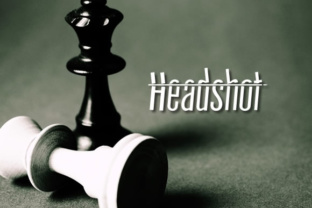
The Headshot font is a display typeface characterized by thick strokes, sharp angles, and a slightly aggressive or assertive posture. Its name itself hints at confrontation and presence—it is a font that demands to be noticed. The letterforms are constructed with a sense of weight and density, making them ideal for headlines, posters, logos, and any scenario where text needs to command attention.
Key characteristics of the Headshot font include:
- High contrast in stroke weight – Some parts of each letter are deliberately thick, while others are thin, creating a dynamic rhythm across the word.
- Sharp terminals and serifs – The ends of strokes often come to a point, giving the font a modern, slightly edgy feel.
- Tight letter spacing – Characters sit close together, reinforcing a sense of density and urgency.
- Uniform x-height – Despite the boldness, the font maintains a consistent height for lowercase letters, which helps with overall readability even at larger sizes.
- Distinctive uppercase forms – The capital letters, especially the “A,” carry the most personality and are often the defining feature of the font.
The Headshot font is not designed for body text. If you try to use it for a long paragraph, it will feel overwhelming and hard to read. That is by design. Its purpose is to make a statement in a short space—a headline, a product name, a call-to-action button, or a logo.
Exploring the “A” Font Concept: Why a Single Letter Matters
When designers refer to the A font in the context of Jeff Bensch’s work, they are often talking about the specialized treatment of the capital “A” within the Headshot typeface family. In many display fonts, the letter “A” is more than just a character—it is a visual anchor. Bensch’s “A” is typically designed with exaggerated angles, a distinctive crossbar, or unique notches that make it instantly recognizable.
Why does this matter? Because in branding and identity design, the first letter of a name often becomes a logo mark. Think of how many brands use a stylized “A” as their primary identifier. Bensch’s approach ensures that this single letter carries enough weight and character to function on its own. This is a practical consideration that elevates a font from being “just a typeface” to being a brand asset.
For general readers, understanding this concept helps explain why some logos feel memorable and others fade into the background. It is often not about the entire word—it is about how that first letter grabs your eye and sets the stage for everything that follows.
Practical Applications of Headshot and A Fonts in Modern Design
Where does a font like Headshot actually get used? The answer spans several industries and media types. Here are some of the most common and effective applications:
- Branding for startups and creative agencies – Bold, expressive fonts signal innovation and confidence. Headshot works well for companies that want to project energy and a no-nonsense attitude.
- Poster and event design – Concerts, festivals, conferences, and product launches often rely on display typefaces to create immediate visual excitement. Headshot can turn a date and venue into a statement.
- Merchandise and apparel – T-shirt graphics, hoodie prints, and accessory branding benefit from fonts that feel physical and tactile. The thick strokes of Headshot hold up well across fabric and printing methods.
- Digital headlines and hero sections – Websites and landing pages use display fonts sparingly, often for the main headline above the fold. Headshot can provide that first punch of visual interest.
- Packaging for premium or niche products – Whether it is a craft beverage, a limited-edition item, or a luxury accessory, packaging that uses a distinctive font like Headshot signals quality and intention.
- Motion graphics and video titles – Because the letterforms are bold and clear, they translate well into animated sequences where text needs to remain readable even during movement.
Each of these applications leverages the font’s core strength: impact. The Headshot font is not subtle, and it should not be used in subtle contexts. That is not a weakness—it is a design constraint that, when respected, leads to powerful results.
How Headshot and A Fit into the Broader Typography Landscape
Typography is often categorized into two broad camps: text typefaces and display typefaces. Text typefaces like Times New Roman, Helvetica, or Georgia are designed for long reading sessions. They prioritize legibility, neutral tone, and consistency at small sizes. Display typefaces, on the other hand, prioritize personality, mood, and visual punch. They are meant to be seen, not just read.
The Headshot font by Jeff Bensch sits firmly in the display category. It is a mood-setting typeface. When you see it, you feel something: urgency, strength, maybe even a little aggression. That emotional response is exactly what a display font should deliver. The “A” font concept within this family reinforces that emotional anchor by giving the most prominent letter an unforgettable shape.
This distinction is important for beginners to understand. If you try to use Headshot for a 500-word article, you will quickly find that readers tire of its intensity. The font was never meant for that job. Knowing which tool to use for which task is the difference between good design and great design.
Moreover, Bensch’s work reflects a broader trend in contemporary typography: the return of handcrafted, expressive letterforms in an increasingly digital world. As screens become more uniform, designers and audiences alike crave authenticity. Fonts that look like they were drawn with intention—rather than generated by an algorithm—feel more human. Headshot fits this mold perfectly. It has rough edges, deliberate quirks, and a sense of physicality that software-native fonts often lack.
Common Misunderstandings About Display Fonts Like Headshot
Even experienced designers sometimes fall into traps when working with bold display typefaces. Let’s address a few common assumptions directly:
- “Big and bold means easy to read.” Not always. Headshot is bold, but its impact comes from its shape, not its size. At very small sizes, the nuances of the letterforms can get lost. Use it at the size it was designed for—large.
- “A unique font is always better for branding.” Uniqueness matters, but it must match the brand’s personality. Headshot works for a brand that wants to feel edgy or assertive. A softer, more traditional brand would be mismatched with this typeface.
- “The ‘A’ is just one letter—it doesn’t matter that much.” In practice, the first letter of a word or logo carries disproportionate visual weight. Bensch’s treatment of the “A” is a reminder that details matter. A beautifully crafted “A” can make a logo memorable even if the rest of the word is generic.
- “Display fonts are only for print.” While Headshot originated in a print-oriented design world, it translates well to digital headlines, video titles, and web hero sections—provided the resolution and size are adequate.
- “You should always pair a display font with a neutral text font.” This is a good rule of thumb, but it is not a law. Sometimes a bold headline works best with minimal surrounding text. Do not feel obligated to add body copy just because you have a display font.
Why Understanding Fonts Like Headshot Helps Broader Design Literacy
For general readers, learning about a specific font like Headshot is not just about trivia—it builds visual literacy. When you understand why a typeface looks the way it does, you make better choices as a consumer, a communicator, or a creator. You start noticing why certain logos feel powerful, why some posters grab your eye, and why a website’s headline might feel flat even if the content is good.
Jeff Bensch’s work, and specifically the Headshot and A font family, serves as a case study in purposeful design. Every curve, angle, and weight choice was made with intention. The font does not try to be everything to everyone. It knows what it is, and it does that job with confidence. That clarity is something any reader—whether a designer, a business owner, or a curious enthusiast—can learn from.
In a world saturated with visual noise, having the right typeface is like having the right voice in a crowded room. The Headshot font speaks loudly, clearly, and with a distinct accent. Jeff Bensch gave it that voice, and understanding it helps all of us communicate better.
Final Thoughts: Building a Broader Appreciation for Typography
The Headshot and A font by Jeff Bensch is more than a stylistic choice—it is a lesson in how form follows function in the world of type. By exploring its design, applications, and place in modern life, we gain a deeper appreciation for the craft that shapes how we read, feel, and connect with written language.
Whether you are designing your first logo, revamping a brand, or simply trying to understand why certain fonts catch your eye, keep the principles of display typography in mind. Fonts like Headshot exist to make a statement. Use them when you have something important to say, and let them do the heavy lifting. The “A” may only be one letter, but in the right typeface, it can speak volumes.
As you continue exploring typography, pay attention to how different fonts make you feel. Notice which ones you trust, which ones excite you, and which ones you ignore. That awareness is the first step toward using type with intention—just as Jeff Bensch does with every letter he designs.