Up No Flames: Finding a Voice in a World of Generic Fonts
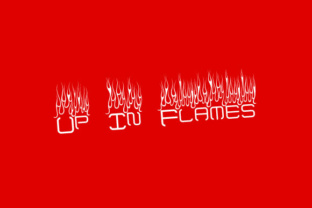
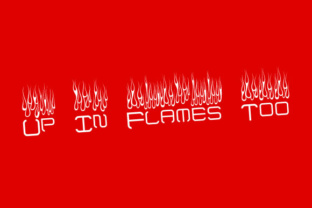
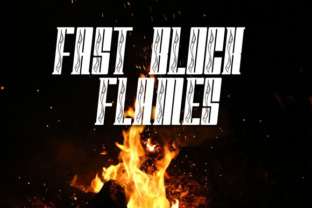
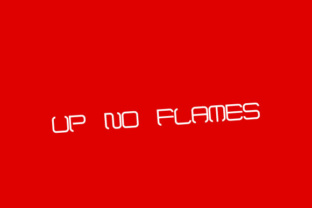
Scrolling through standard font libraries can feel a little hollow. You know the typefaces I am talking about: clean, safe, and completely forgettable. They have a place in annual reports and legal disclaimers, but they rarely communicate a genuine sense of personality. That is the gap that Up No Flames was built to fill. Designed by Jeff Bensch, this typeface does not try to blend into the background. It demands a second look. It draws heavily from the visual language of vintage signage, punk rock ephemera, and underground print culture. If your project needs to project authenticity, energy, or a deliberate rawness, this font provides a direct shortcut to that emotional register. It is a tool for people who understand that how something looks is just as important as what it says.
Where Up No Flames Actually Belongs
Up No Flames is not a font for passive reading. It is a font for confrontation, announcement, and celebration. Its natural habitat is the headline, the logo, the poster, and the short burst of text that needs to stop a reader in their tracks. You will find it in the wild on album covers that need grit, on the labels of small-batch hot sauces that want to feel homemade and dangerous, and on the menus of diners that lean heavily into a retro aesthetic. It carries the visual weight of a silkscreened t-shirt or a hand-painted storefront window. When you use it, you borrow that history. It signals that you care about craft and that you are not sanitizing your message for mass appeal. It is a deliberate choice for a deliberate audience.
Think about the physical spaces you inhabit. A local record store, an indie bookstore, a skate shop at the edge of town. These places rarely lean on corporate typography. They use typefaces like Up No Flames because they want to feel grounded in a specific subculture. That same principle applies to digital spaces. A podcast cover for a true crime show or a Twitch overlay for a gaming channel can immediately communicate a specific tone through this kind of typography. It bridges the gap between the digital and the tactile. It suggests that there is a human hand behind the creation, not just a template.
Who Gets the Most Value from This Typeface
Different people look for different things in a font. Some need efficiency and clarity. Others need soul. Up No Flames is squarely in the latter category. Here is how different users tend to benefit from it.
The Entrepreneur and Small Business Owner. If you are building a brand from scratch, the math is simple: you cannot afford to look boring. A craft brewery, a boutique barbershop, or a hot sauce company needs to communicate its identity in a split second. Up No Flames gives you that instant credibility. It suggests you are hands-on, maybe a little rebellious, and definitely not corporate. It helps your product feel established and authentic, even on day one.
The Content Creator and Digital Marketer. The battle for attention is fought in the thumbnail. Up No Flames is engineered to perform in those cramped, competitive spaces. It works exceptionally well for YouTube title cards, Instagram story headlines, and square graphics announcing a flash sale. It mimics the urgency of a physical flyer stapled to a telephone pole. It cuts through the polished, filtered noise of most social media feeds. If your content relies on a bold personality, this font helps you project it immediately.
The Hobbyist and Educator. Even outside of commerce, presence matters. A history teacher creating a poster about the punk era or a zine maker printing a limited run finds huge value in this aesthetic. It matches the subject matter. It creates a consistent visual language that supports the content, rather than fighting against it. It respects the intelligence of the audience by offering a cohesive experience from the headline to the layout.
Real Scenarios, Real Outcomes
Let us look at a few practical situations where Up No Flames shifts the way a project is received.
Scenario A: The Product Launch. You are launching a small line of hot sauces. Your competitors use generic script fonts or clip art peppers. You choose Up No Flames for the label. The font feels loud, a little chaotic, and completely unpolished in the best way. Customers pick up the bottle because it looks like it was designed by an actual chef or a friend in a garage, not by a focus group. The font sells the experience before the first taste. The outcome is differentiation in a crowded market.
Scenario B: The Podcast Cover Art. You host a show about cult films and late-night television. Your cover art needs to capture that seedy, magnetic energy. Using Up No Flames for the title imprints a retro, analog feel onto a purely digital medium. Listeners scrolling through their apps associate your show with a specific era and attitude before they even hear your voice. The font acts as a quality signal for the specific niche you are targeting.
Scenario C: The Local Event. You are organizing a live music show or an art market at a local venue. You need a flyer that looks good on a street pole and on Instagram. Up No Flames lets you create a strong visual hierarchy. It handles the heavy lifting of the headline, allowing you to pair it with simpler text for the details. The result is a cohesive piece of communication that feels urgent and community-driven. People trust the event because the visual identity feels intentional.
What to Keep in Mind Before You Use It
Choosing a font is an exercise in restraint. Up No Flames is powerful, but only when used correctly. The most common mistake people make is using a single display font for everything. Here are a few practical considerations to keep in mind.
- It is a display font, not a workhorse. Do not try to set a long paragraph in Up No Flames. It is designed for headlines, pull quotes, and short bursts of text. It needs room to breathe. Surround it with white space and let it dominate the composition.
- Pair it carefully. Because it carries so much personality, you need a neutral partner. A clean sans-serif like Montserrat or a classic serif like Playfair Display provides the contrast needed to make your layout look professional. The tension between the loud headline and the quiet body text is what makes the design work.
- Understand the licensing. This is a must. Before you use Up No Flames for a commercial logo, product packaging, or merchandise, check the specific license from Jeff Bensch. Font licensing can be specific, and using a free personal font for a commercial project puts you at risk. Respect the work of the designer by securing the correct license for your application.
- Match the tone to the task. Up No Flames is rebellious, loud, and nostalgic. If you are selling luxury consulting services or corporate legal advice, the energy will clash hard with the message. But if you are selling authenticity, handmade quality, or a shared subculture, it will resonate deeply with your audience.
The Psychology of Choosing with Intention
Typography is a shortcut to emotion. Every font carries a history and a set of assumptions. When you choose Up No Flames, you are not just picking a style. You are aligning yourself with a specific tradition of design that values expression over perfection. It says that you understand the value of texture, of imperfection, and of standing out.
Whether you are a designer building an identity for a client, a small business owner trying to capture a feeling, or a creator looking for a visual edge, the choice of typeface matters. Up No Flames is a tool that rewards intentionality. Use it for the moments that demand attention. Use it to tell your audience that you are comfortable being a little different. That kind of authenticity cannot be faked, but it can be designed. This font gives you the raw material to do exactly that.