Up in Flames: When Your Design Needs to Burn Bright
You know that moment when a project needs to stop whispering and start shouting? When every other typeface you’ve tried feels too safe, too polished, too… polite. That’s exactly where Up in Flames by Jeff Bensch steps in. This isn’t a font you use to write a thank-you note. It’s a visual punch, a statement that says: “This is urgent. This is heat. This is intentional.”
What Up in Flames Actually Is
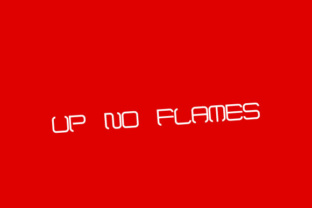
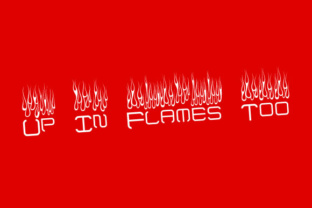
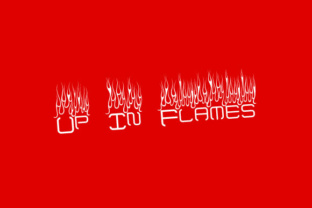
Up in Flames is a display typeface that mimics the look of flame-licked, partially destroyed lettering. Each character looks as though it’s been through a fire — edges are rough, some parts seem to be crumbling, and the overall effect is both gritty and energetic. Created by the talented Jeff Bensch, it sits in that sweet spot between a distressed font and a fully themed showstopper.
Think of it as the typographic equivalent of a weathered concert poster you’d find stapled to a telephone pole after a three-day festival. Or the lettering on a survival video game’s main menu. It carries history, tension, and a raw kind of beauty that clean, modern sans-serifs just can’t touch.
Where Up in Flames Shines Brightest
If you’re wondering whether this font belongs in your next project, the easiest way to decide is to think about atmosphere. Up in Flames works best when the vibe you’re aiming for includes intensity, rebellion, or a touch of the apocalyptic. Let’s walk through some real-world scenarios where it doesn’t just work — it elevates.
Music Festival and Club Night Posters
Poster design for concerts and nightlife is one of the most natural homes for Up in Flames. A metal band, a punk show, a late-night DJ set — any event that promises a high-energy, slightly dangerous good time. The font’s burned-out edges echo the wear and tear of a loud, sweaty venue. Combine it with dark backgrounds, high-contrast photography, or stark monochrome, and you’ve got a poster that people stop to read.
Example: Imagine a poster for a Halloween rave. The headliner’s name set in Up in Flames. A crimson gradient behind it. Even before you read the details, you feel the temperature rise.
Merchandise and Apparel That Tells a Story
T-shirt graphics, hoodie prints, hat logos — Up in Flames is practically begging to be screen-printed. The font’s uneven texture looks like it was stenciled in a hurry, which is exactly the aesthetic many streetwear and alternative fashion brands chase. A single word like “REBEL” or “CHAOS” in Up in Flames across a black tee communicates more than a full paragraph of marketing copy ever could.
Observation: Some apparel designers worry that distressed fonts look unprofessional at small sizes. But Up in Flames holds its irregular shape well because the letterforms are still clearly legible — just roughed up. It’s a fine line between “worn out” and “unreadable,” and Jeff Bensch walks it smartly.
Video Game UI and Title Screens
Game developers, especially those working in post-apocalyptic, horror, or survival genres, have a lot to gain from Up in Flames. A game titled “Last Ember” or “Scorch” practically asks for this kind of lettering. The font sets the player’s expectations immediately. You know you’re not in for a cozy farming sim — you’re in for heat, danger, and limited resources.
Consideration: Avoid using Up in Flames for in-game instructions or dialogue. It’s a display font for big, emotional moments. Let your body text stay clean, and save the fire for where it counts: the title, chapter headings, or key object labels.
Different Users, Different Wins
The beauty of Up in Flames is how it adapts to the identity of the person using it. A tattoo artist might use it for flash sheets or shop logos because the font’s rough edges mirror the permanence and boldness of tattooing. A small-batch hot sauce brand could slap it on labels to instantly communicate “spicy” without a single pepper icon. An indie filmmaker making a short about wildfires or a phoenix legend might use it for the opening credits.
Real talk: I once saw Up in Flames used as a headline font in a charity run brochure for firefighters. The irony was not lost on the organizers, and the community loved it. It’s those moments of clever, context-aware use that make a font feel less like a tool and more like part of the story.
Event Invitations and Social Media Graphics
Not every event is a rave. Up in Flames can also work for more serious or dramatic occasions. A museum exhibition about the great fires of the 20th century, a book launch for a thriller with fire as a plot device, or a YouTube channel trailer for a creator who discusses “burnout” culture — all of these benefit from the visual language of heat and destruction. On social media, Up in Flames grabs attention in a feed crowded with polished, overdesigned content. It breaks the rhythm.
Practical tip: Apply a slight glow or drop shadow to Up in Flames letters to emphasize the flickering, burning effect. But be careful with shadows on detailed backgrounds — sometimes a flat, stark placement cuts through better.
Common Considerations Before You Commit
Before you load Up in Flames into your design software, think about context, contrast, and audience. Let’s be honest: if your client sells life insurance or runs a dental practice, this font will work against you. It’s not versatile in the sense that it fits everything. Its strength is its specificity.
- Legibility at small sizes: Up in Flames performs best at headline or title sizes — 24pt and above. Use it for short phrases only in small contexts. Anything longer or smaller, and the distressed details can blur into noise.
- Background compatibility: Busy, textured backgrounds can hide the burned-out areas of the letters, making the font look messy. Test it on solid, dark, or desaturated backdrops first.
- Licensing and file format: Jeff Bensch’s fonts are typically available through his personal site or select type foundries. Make sure you check the license — some projects (like commercial merchandise or broadcast) require an extended license. It’s a quick checkbox that saves headaches later.
- Complementary typefaces: Pair Up in Flames with a clean, simple sans-serif for body copy. Something like Montserrat, Lato, or even classic Helvetica. The contrast between orderly and chaotic is visually pleasing.
Strengths That Make It a Go-To
Up in Flames has a few specific strengths that keep designers coming back. First, it’s incredibly evocative — one word in this font can set the entire mood for a project. Second, it’s distinctive. In a world where 80% of display fonts are either brush scripts or geometric sans-serifs, a flame-scorched typeface stands out. Third, the workmanship: Jeff Bensch balances destruction with readability. The letters aren’t just random holes and burnt edges; they’re crafted so the core of each character still reads instantly.
Where It Might Fall Short
No font is perfect for every job. Up in Flames can feel too thematic, locking you into a very narrow aesthetic. If you want to create something that feels contemporary and clean — like a tech startup landing page — this isn’t your font. Also, because it’s a display typeface, you can’t use it for long blocks of text. Some designers forget this and end up with a wall of illegible charred letters.
Observation from experience: I once saw a flyer for a “Fire Safety Week” event that used Up in Flames for the subtitle. The irony was intended, but the legibility at a distance was poor because the subtitle was set in 10pt. The designer would have been better off using the font only for the main headline and a simple sans-serif for the details.
Making Your Own Fire
Whether you’re a seasoned graphic designer, a small business owner designing your own labels, or a hobbyist creating posters for a local event, Up in Flames gives you access to an emotional tone that’s hard to achieve with other typefaces. It’s not a font for every day — it’s a font for the days when you want to create heat. Use it wisely, respect its limits, and it will reward you with a visual impact that lingers.
If you’re curious, try it on a single word first. Drop it into a mockup, play with color and texture, and see how it changes the energy of your layout. Sometimes all a project needs is a little fire, and Up in Flames is the match.