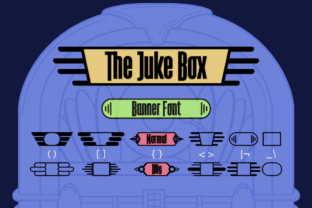
The Juke Box Font: Unlocking Creative Possibilities with a Fun, Frame-Based Typeface
Typography is more than just letters on a page—it’s a visual art form that can transform a simple message into an experience. While many fonts focus on the shape of the characters themselves, some typefaces push creativity further by adding structural or decorative frameworks around the text. The Juke Box font is one such original design. It presents each letter inscribed inside a frame, and what makes it truly playful is the ability to “close the box” by selecting any of the 12 included sets. This article explores what this unique font is, how it works, its practical applications, and why it’s a valuable tool for designers and hobbyists alike.
What Is The Juke Box Font?
At its core, The Juke Box is a decorative typeface that combines letterforms with a surrounding frame. Rather than standing alone, each character is nested within a rectangular or square border, giving the text a structured, contained look reminiscent of music box labels, vintage signage, or playful card games. The font is designed to be modular: every letter, number, and symbol is drawn to fit neatly inside the same basic outline, so when you type a word, you get a series of framed glyphs that align perfectly.
The real charm lies in the 12 sets that come with the font. Each set offers a distinct variation of the frame—different border thicknesses, corner shapes, fill patterns, or even subtle interior details. By switching between sets, you can change the entire mood of your text without altering the letter shapes themselves. This allows you to “close the box” in multiple ways, meaning you can customize the frame to suit your project’s tone, from bold and chunky to delicate and playful.
How Does “Closing the Box” Work?
The concept is straightforward but powerful. When you install The Juke Box font, you actually get 12 separate font files (or a single OpenType font with stylistic sets, depending on the version). Each file or set corresponds to one frame style. To use a particular set, you simply select that font variant in your design software and type your text. The letter appears with the chosen frame wrapped around it.
For example, one set might feature a thick, solid border with rounded corners, giving your text a friendly, approachable look. Another set could have a double line frame with tiny dots in the corners, evoking a playful game-board aesthetic. A third set might include a fill pattern inside the frame behind the letter, such as stripes or checkers. The 12 sets provide enough variety to create diverse designs, from minimalistic to intricate, all while maintaining a consistent base alphabet.
Switching between sets is as simple as changing the font selection in your software. This modular approach means you can experiment quickly: try a word with a thin frame, then instantly swap to a thick frame, and see which better fits your layout. The font is designed so that all sets share the same letter widths and spacing, so swapping sets won’t disrupt your typographic alignment.
Why Use a Frame-Based Font Like The Juke Box?
In a world saturated with thousands of typefaces, standing out requires more than just a pretty script. The Juke Box font offers several distinct advantages that make it a smart choice for specific designs:
- Instant Visual Structure: Every letter is automatically framed, which can help organize text in posters, social media graphics, or product labels. The frames act as visual containers, creating a clean, grid-like appearance.
- Built-In Consistency: Because all characters share the same frame style within a set, your text looks uniform and professional without manual adjustments. No need to draw boxes around each letter—the font does it for you.
- Variety Without Bloat: With 12 sets, you effectively get 12 different fonts in one package. This allows you to match the frame style to the mood of your project without cluttering your font library.
- Playful Personality: The font’s name “Juke Box” hints at its retro, music-themed charm. It’s inherently fun and approachable, making it ideal for projects that need a touch of whimsy or nostalgia.
- Endless Customization: Beyond the sets, you can further modify the frames by adjusting color, adding shadows, or overlaying textures. The font serves as a strong base for further creative exploration.
Practical Applications in Modern Design
The Juke Box font isn’t just a novelty—it’s a versatile tool that can be applied across many areas of design. Its framed letters lend themselves especially well to contexts where you want text to be both readable and eye-catching.
Branding and Logos
Small businesses, food trucks, boutiques, or entertainment brands often need logos that convey personality without being overly complex. Using The Juke Box font, you can create a wordmark where each letter sits proudly in its own box. Choose a set with rounded corners for a friendly ice cream shop, or a set with sharp, bold frames for a sports club. The 12 sets let you test different brand vibes with a simple font change.
Social Media and Digital Content
In an age of scrolling feeds, visual distinction is crucial. Instagram stories, YouTube thumbnails, Facebook posts, and Pinterest pins all compete for attention. The Juke Box font’s framed letters act like built-in badges or stickers. Use a vibrant set to highlight a single word (like “SALE” or “NEW”) or to create a series of framed keywords for an infographic. The uniformity makes the text easy to read even on small mobile screens.
Print and Merchandise
Posters, flyers, stickers, T‑shirt designs, and product packaging all benefit from structured typography. The Juke Box font allows you to create titles that pop off the page. For example, a music festival poster could use the font to spell out band names inside frames that mimic old jukebox song selection buttons. On merchandise, a framed word becomes a standalone design element that doesn’t rely on complex illustrations.
Educational and Gamified Materials
Teachers or content creators making worksheets, quizzes, or educational games can use The Juke Box font to turn words into little puzzle boxes. Because each letter is framed, you can ask students to match letters, colors, or patterns. The 12 sets provide variety to keep materials fresh. The font is also great for decorative headings in children’s books or DIY board games.
Tips for Getting Started with The Juke Box Font
If you’re new to decorative fonts, don’t worry—The Juke Box is easy to use. Follow these steps to begin experimenting:
- Install the font. Download the font files (typically .otf or .ttf) from a reputable type foundry. Install them on your computer following your operating system’s instructions.
- Open your design software. The font works in any program that supports custom fonts, such as Adobe Illustrator, Photoshop, Canva, Affinity Designer, or even Microsoft Word (though Word has limited OpenType support).
- Type your text. Start with a single word to see how the frames align. Use all caps for a uniform look—many framed fonts are designed with uppercase letters for maximum consistency.
- Switch between sets. If you have separate font files for each set, simply change the font selection. If the font uses OpenType features, look for the “Stylistic Sets” dropdown in your software and cycle through the options. Each set will change the frame’s appearance.
- Experiment with spacing and color. Because the frames touch each other (unless you add tracking), the letters can form a continuous line of boxes. Adjust letter spacing to create gaps for a badge-like look. Then play with fill colors, outlines, and effects like shadows to make your text stand out.
- Combine with other fonts. Use The Juke Box sparingly for headlines or keywords, and pair it with a simple sans-serif for body text. This balances visual impact with readability.
One tip: because the frame adds weight, avoid using the font for long paragraphs. It shines best in short, impactful uses.
Common Misunderstandings About The Juke Box Font
As with any playful typeface, some designers may initially dismiss it as too niche or childish. However, The Juke Box font is far more versatile than it seems. Let’s address a few assumptions:
- “It’s only for retro or music themes.” While the name nods to jukeboxes, the frame designs themselves can be modern, minimalist, or even elegant—depending on the set you choose. A thin, clean frame can complement a contemporary brand perfectly.
- “The frames limit creativity.” Actually, the frames provide a constraint that can spark creativity. Many designers find that working within a structured grid helps them generate ideas they wouldn’t have otherwise. The 12 sets give you freedom within boundaries.
- “It’s hard to read.” Legibility depends on context. The font is designed with clear letter shapes inside the frame. If you use it at large sizes for short words, reading is easy. For small sizes, choose a set with a thinner frame to avoid filling the box too much.
- “I don’t need 12 sets.” Even if you only use two or three, the variety helps future-proof your projects. You’ll always have options when the design brief changes.
The Role of Playful Typography in Today’s Creative Landscape
In a digital world where users are bombarded with information, unique typography is a powerful way to cut through noise. Brands and creators increasingly turn to custom, expressive fonts to establish identity and emotion. The Juke Box font fits perfectly into this trend: it is not just a typeface but a design element that adds value from the moment it’s applied.
Playful typefaces encourage experimentation. They remind us that type can be more than a medium for words—it can be art in itself. By allowing you to “close the box” in multiple ways, The Juke Box font invites you to participate in the design process. You’re not just selecting a font; you’re choosing how each word is framed. This interactivity makes design more engaging, even for beginners.
Moreover, the rise of independent font foundries has made unique fonts accessible to everyone. The Juke Box represents this democratization of design: a tool that was once only available to professional typographers is now at the fingertips of a student making a flyer or a small business owner creating a logo.
Conclusion
The Juke Box font is a delightful original typeface that turns letters into framed works of art. Its core concept—letters inscribed inside a box that can be “closed” using any of 12 included sets—offers unmatched flexibility for playful, structured designs. Whether you’re designing a brand identity, a social media post, or a product label, this font helps you create unique, eye-catching text that stands out.
By understanding how the sets work and exploring practical applications, you can unlock the full creative potential of The Juke Box. It bridges the gap between typography and graphic design, making it a valuable addition to any designer’s toolkit. So go ahead, open the box, explore the sets, and let your letters shine in their own custom frame.