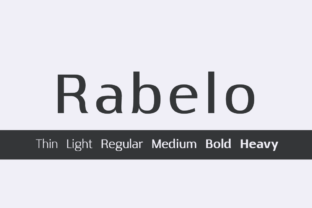
Rabelo Thin: A Lightweight Typeface with Quiet Authority
When you first encounter Rabelo Thin, the impression is one of subtle refinement. This is not a font that demands attention through weight or ornamentation. Instead, it earns its place through balance, clarity, and an understated elegance that feels both modern and timeless. As the lightest member of the Rabelo font family, Rabelo Thin offers something increasingly rare in digital design: the courage to be quiet. And yet, quiet does not mean weak. In the right hands, this typeface becomes a tool for communicating sophistication, openness, and precision.
What Makes Rabelo Thin Distinctive
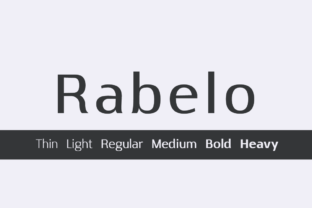
Rabelo Thin is a sans-serif typeface characterized by its delicate stroke weight, generous proportions, and carefully calibrated letter spacing. The Regular version of the Rabelo font family is free and is included, which means you can explore the core design philosophy without any upfront commitment. You can view and order the other weights of the Rabelo family here, but Rabelo Thin holds its own as a purposeful choice rather than just a lighter variant.
What sets Rabelo Thin apart is not merely its thinness but the way it maintains legibility at smaller sizes despite the reduced stroke weight. The designers have paid careful attention to terminal shapes, open counters, and x-height balance. This means that even in body text applications, Rabelo Thin does not dissolve into a faint line—it retains character and presence.
Key Characteristics at a Glance
- Light stroke weight that creates an airy, spacious feel on the page or screen
- Generous x-height supporting readability even at reduced sizes
- Open counters that prevent small text from closing up or becoming muddy
- Consistent spacing that works well in both dense and minimal layouts
- Neutral yet expressive personality that avoids trendiness while feeling contemporary
Who Benefits Most from Working with Rabelo Thin
Rabelo Thin is not a one-size-fits-all typeface, and that is precisely its strength. It serves specific use cases exceptionally well, and understanding those cases helps you decide whether it fits your project.
Designers and Creative Professionals
For graphic designers, web designers, and brand identity specialists, Rabelo Thin offers a restrained voice that pairs beautifully with bolder weights. It excels in layered typographic hierarchies where you need a subtle counterpoint to a heavier headline. Think of it as the quiet member of a band that makes the lead vocalist sound even better. When used in combination with the Regular weight or other members of the Rabelo family, it creates a natural rhythm across headings, subheadings, and body copy.
Business Owners and Entrepreneurs
If you are building a brand from scratch or refreshing an existing identity, Rabelo Thin communicates a specific kind of confidence. It says you do not need to shout to be heard. This makes it particularly suitable for businesses in creative fields, wellness, premium services, architecture, fashion, and editorial publishing. A brand that uses Rabelo Thin signals attention to detail and a willingness to let quality speak for itself.
Content Creators and Online Publishers
Bloggers, newsletter writers, and content marketers often struggle with readability versus aesthetics. Rabelo Thin strikes a balance that works well for digital reading when applied thoughtfully. Its lightness reduces visual fatigue in longform content, especially when used with adequate line spacing and contrast. Readers perceive it as clean and uncluttered, which supports retention and engagement.
Real-World Scenarios Where Rabelo Thin Excels
The true test of any typeface is not how it looks in a specimen sheet but how it performs in the wild. Here are several scenarios where Rabelo Thin proves its value.
Minimalist Brand Identities
A skincare brand wanted to communicate purity, lightness, and precision. Rabelo Thin became the primary typeface for their packaging, website, and printed collateral. The thin strokes echoed the brand ethos of minimal intervention and clean formulation. Customers described the packaging as "breathable" and "honest"—qualities that directly tied back to the typographic choice.
Editorial and Magazine Layouts
In a travel magazine feature about remote Scandinavian cabins, Rabelo Thin was used for pull quotes and captions. It gave the spreads a sense of air and openness, complementing the photography without competing for attention. Readers lingered longer on spreads where the typography felt less aggressive and more inviting.
Digital Products and App Interfaces
A productivity app used Rabelo Thin for onboarding screens and empty states. The lightness of the typeface made the interface feel less intimidating and more welcoming. Users reported that the app felt "easier to start using" compared to competitors with denser, heavier typography.
Event Invitations and Stationery
For a gallery opening invitation, Rabelo Thin set the tone for an evening that promised subtlety and depth. The thin letterforms, printed on textured paper, created a tactile experience that heavier typefaces could not replicate. Guests commented on the "elegance" of the invitation before even reading the details.
Strengths and Practical Considerations
Like any specialized tool, Rabelo Thin has strengths that shine in certain contexts and limitations that matter in others. Being aware of both helps you use it effectively.
Strengths
- Exceptional elegance in large display sizes, where the thin strokes become a design feature rather than a functional choice
- Strong pairing potential with heavier weights, serif fonts, and script typefaces, giving you flexibility in complex layouts
- Legibility at medium sizes when combined with generous leading and proper contrast
- Modern refinement that avoids the coldness of many geometric sans-serifs
Considerations and Limitations
- Not ideal for very small body text in print or low-resolution screens, where thin strokes may disappear or become hard to read
- Requires careful contrast management—light gray text on a white background will likely fail for accessibility
- Best suited for projects with ample white space; dense layouts can make thin typefaces feel lost rather than intentional
- May not read well in environments with glare such as outdoor signage or glossy print under direct light
Evaluating Whether Rabelo Thin Is Right for Your Project
Making a thoughtful typographic choice involves more than liking how a font looks. Here is a practical framework for assessing whether Rabelo Thin aligns with your needs.
Consider Your Primary Medium
If your project lives primarily on high-resolution screens (retina displays, modern smartphones, tablets) or in quality print with good paper stock, Rabelo Thin will perform well. If you expect users to read on low-resolution monitors, small screens, or in challenging lighting, consider using it only for larger display text and pairing it with a more robust weight for body copy.
Assess Your Content Volume
For short-form content—headlines, labels, quotes, navigation—Rabelo Thin can carry the entire typographic load. For longform articles, whitepapers, or dense documentation, it works best as a complement to the Regular weight or another readable typeface.
Think About Brand Personality
Rabelo Thin aligns with brands that value subtlety, clarity, and refinement. If your brand voice is bold, assertive, or playful, this might not be the ideal weight to lead your identity. However, it can still play a supporting role in materials where a softer touch is needed.
Test in Context
Always test Rabelo Thin in the exact medium where it will be used. A font that looks stunning in a design mockup can behave differently in a live web environment or a printed proof. Check legibility, readability, and overall impression with real content, not placeholder text. The Regular version of the Rabelo font family is free and is included, which makes testing accessible from the start. You can view and order the other weights of the Rabelo family here if you need additional options after testing.
Pairing Rabelo Thin with Other Typefaces
One of the most practical skills in typography is pairing typefaces that complement rather than clash. Rabelo Thin is particularly versatile in this regard.
With Serif Typefaces
For a classic editorial feel, pair Rabelo Thin with a refined serif such as a Garamond or a contemporary slab serif. The thin sans-serif contrasts beautifully with the serif's structure and warmth, creating a readable and visually interesting hierarchy.
Within the Rabelo Family
The most natural pairing is with the Regular weight of the Rabelo family itself. Using Rabelo Thin for headings or callouts alongside Rabelo Regular for body text creates a cohesive yet varied experience. The family relationship ensures visual harmony while the weight difference provides clear hierarchy.
With Script or Handwritten Fonts
For invitations, branding, or social media graphics, Rabelo Thin pairs well with a delicate script. The contrast between the structured sans-serif and the flowing handwritten style adds personality without becoming chaotic.
Final Thoughts on Working with Rabelo Thin
Rabelo Thin is not a typeface you choose by accident. It requires intentionality. You choose it because you understand that lightness can communicate as powerfully as boldness. You choose it because you value clarity over noise. And you choose it because you trust your content and your audience enough to let them breathe.
Whether you are designing a brand identity, building a website, creating editorial layouts, or refining a product interface, Rabelo Thin offers a tool that is both specialized and surprisingly flexible. The Regular version of the Rabelo font family is free and is included, so there is no barrier to exploring its possibilities. You can view and order the other weights of the Rabelo family here when you are ready to expand your typographic toolkit. But start with Rabelo Thin. See what quiet authority can do for your next project.