Roung and Roung: A Modern Sans Serif for Clarity and Character
You have probably seen a thousand sans serif fonts in your career. Some feel clinical. Others try too hard to be friendly. A few manage to be both legible and distinctive without shouting for attention. Roung and Roung, designed by Sai Aditya, sits in that sweet spot. It is a sans serif typeface that balances geometric precision with a subtle human touch. If you work with text every day—whether you are building a brand, laying out a newsletter, or designing slides for a client—this is a font worth understanding.
What Makes Roung Different from Other Sans Serifs
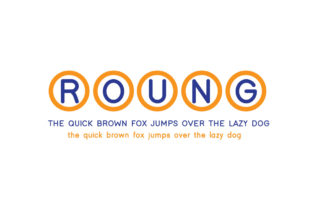
At first glance, Roung looks like a straightforward geometric sans. The letterforms are clean, the strokes are even, and the overall impression is orderly. But spend a few minutes with it, and you will notice details that set it apart. The terminals have a slight softness, a rounding that gives the typeface its name. This is not a rigid, mechanical shape. The curves feel deliberate rather than calculated.
The x-height is generous, which makes the font readable at small sizes. The apertures are open, so letters like e and a stay distinct even on a screen with low resolution. The spacing is tight enough to look polished but loose enough to avoid crowding. These qualities matter when you are setting body text or captions, where every pixel counts.
Sai Aditya designed Roung with a focus on versatility. The character set includes multiple weights, from light to bold, and each weight maintains the same essential structure. The light weight works well for large headlines, while the bold weight holds its own in dense paragraphs. The consistency across weights means you can mix them in a single layout without visual dissonance.
Branding and Identity Work
If you are a designer or a brand manager, you know that a font often carries the personality of a business. Roung works particularly well for companies that want to project modernity without coldness. A tech startup might use it for a website header, pairing it with a more traditional serif for body text. A consulting firm could rely on its clean lines for presentation decks. The soft rounding prevents the typeface from feeling sterile, which is a common pitfall with geometric sans serifs.
I have seen Roung used effectively in logo lockups where the wordmark needs to stand alone. The even stroke width and consistent spacing make it predictable and easy to kern. If you are working on a brand manual, you will appreciate how Roung behaves across different media—it looks just as good on a business card as it does on a billboard.
Digital Products and User Interfaces
For product designers and developers, readability at small sizes is non-negotiable. Roung performs well in UI contexts because of its open counters and generous x-height. Buttons, labels, and navigation items remain clear even on mobile screens. The light weight works for secondary text, while the medium or bold weights handle primary actions.
One practical observation: if you are designing a dashboard or a data-heavy interface, Roung helps reduce visual fatigue. The letterforms are straightforward enough that users focus on the content rather than the typeface itself. That is the mark of a good UI font—it disappears into the experience.
Editorial and Publishing
Bloggers, publishers, and content creators will find Roung useful for online articles and newsletters. The font works well for subheadings, pull quotes, and short paragraphs. Its readability on screens reduces bounce rates because readers do not have to strain to follow the text. For long-form content, I recommend pairing Roung with a serif for the body, but it can handle short articles on its own.
I have used Roung in email newsletters, and the results were positive. The open letter shapes render well across email clients, and the multiple weights give enough flexibility to create hierarchy without adding a second typeface. This simplifies the design process and keeps the layout cohesive.
Educational and Training Materials
Educators and instructional designers often need fonts that are clear, neutral, and accessible. Roung meets those criteria. Course slides, handouts, and online modules benefit from its legibility. The lack of decorative flourishes means that nothing distracts from the learning content. For accessibility, the strong letterforms and high contrast between weights make it easier for learners with visual impairments to parse the material.
Marketing and Advertising
Marketers will appreciate Roung for landing pages, social media graphics, and ad creatives. The font has enough presence to grab attention in a headline but does not compete with the message. It works well with bold colors and imagery because the typeface itself is neutral. If you are running A/B tests on ad copy, a clean font like Roung removes one variable from the equation—you can be confident that the typeface is not skewing engagement.
Usability and Efficiency
Using Roung saves time in production. Because the weights are consistent, you do not have to spend extra effort adjusting tracking or leading when you switch between them. The font also includes common ligatures and alternate characters, which give you options without requiring custom modifications. For freelancers and small teams, this efficiency adds up over a project.
Communication and Engagement
Typeface choice influences how readers perceive your content. Roung communicates clarity and intention. When your text is easy to read, people stay engaged longer. That is not hype—it is a well-documented factor in user experience. The font works especially well for call-to-action phrases, where every word matters.
Brand Consistency Across Channels
One of the hidden strengths of Roung is its adaptability. It renders well in print, on screens, and even in less common environments like digital signage or presentation software. This consistency helps maintain brand cohesion across channels. If your business uses different platforms for customer communication, using the same typeface everywhere reduces cognitive friction for your audience.
Considerations When Choosing Roung
No typeface is perfect for every situation. Roung is a sans serif with a modern sensibility, but it may not suit projects that require a traditional or handcrafted feel. If your brand identity leans heavily on organic shapes or vintage aesthetics, a more expressive font might serve you better.
Also, while Roung works well for body text in short to medium lengths, I would not recommend it for very long reading sessions without pairing it with a serif. The geometric structure can feel monotonous over thousands of words. That is a common trait among sans serifs, not a flaw specific to Roung.
When evaluating Roung for your project, test it at the actual sizes you will use. Download the trial version and set some sample text in context. Look at how it renders on different devices and in different lighting conditions. Pay attention to how the spacing holds up when you use all caps or small caps. These real-world checks will tell you more than any spec sheet.
Final Thoughts on Roung and Roung
Roung is a thoughtfully crafted typeface that brings both function and personality to the table. Sai Aditya has created a font that works hard without asking for attention. Whether you are building a brand, designing a product, writing a newsletter, or creating learning materials, Roung gives you a reliable, readable, and refined tool. It earns its place in your type library—not because it is flashy, but because it consistently delivers.