Not So Stout Deco: Exploring Jeff Bensch’s Distinctive Typeface and Its Place in Modern Design
Fonts are everywhere, shaping how we read, feel, and respond to visual information. While some typefaces fade into the background, others command attention with their personality and historical resonance. One such font that has quietly earned a devoted following among designers, hobbyists, and branding professionals is Not so Stout Deco, a typeface created by the talented font designer Jeff Bensch. If you have ever encountered a bold, geometric, slightly playful letterform that evokes the glamour of the 1920s while feeling refreshingly modern, you may have already seen this font in action. In this article, we will explore what makes Not so Stout Deco special, who Jeff Bensch is, why this typeface matters, and how you can use it effectively in your own projects.
What Is Not so Stout Deco?
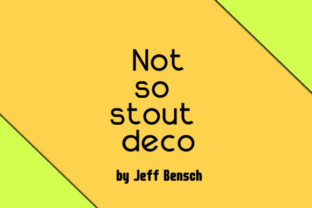
Not so Stout Deco is a decorative display typeface that draws clear inspiration from the Art Deco movement of the early twentieth century. The name itself offers a playful clue: it is a lighter, less heavy version of a hypothetical “Stout Deco” style. Where a stout deco font would be thick, blocky, and imposing, Not so Stout Deco retains the geometric elegance and clean lines of Art Deco typography but with a more approachable, airy weight. Think of it as the difference between a solid brick wall and a delicate wrought-iron gate—both are structural and beautiful, but one feels significantly lighter and more open.
Jeff Bensch designed this font with a keen eye for history and usability. The letterforms feature the characteristic sharp angles, vertical emphasis, and stepped shapes that define the Art Deco aesthetic. Yet Bensch softened the proportions just enough to make the font versatile for contemporary uses. The result is a typeface that feels both nostalgic and current, making it a favorite for posters, logos, invitations, headlines, and any project that needs a touch of vintage sophistication without feeling heavy or outdated.
Who Is Jeff Bensch?
Jeff Bensch is a prolific typeface designer known for creating fonts that blend historical styles with modern functionality. While he may not be a household name like some of the giants of typography, his work has earned respect within the design community for its craftsmanship, clarity, and character. Bensch has designed a wide range of typefaces, from elegant scripts to bold display fonts, and his portfolio reflects a deep understanding of letterform history and contemporary design needs.
What sets Bensch apart is his ability to take a recognizable historical style—such as Art Deco—and reinterpret it in a way that feels fresh and usable. Not so Stout Deco is a perfect example of this approach. Rather than merely copying vintage lettering, Bensch distilled the essence of Deco geometry and gave it a new, lighter personality. This makes his work valuable for designers who want to evoke a specific era without falling into cliché or sacrificing readability.
The Art Deco Influence: A Quick Background
To fully appreciate Not so Stout Deco, it helps to understand the Art Deco movement itself. Art Deco emerged in the 1920s and 1930s as a style that celebrated modernity, luxury, and geometric precision. It influenced architecture, furniture, jewelry, fashion, and of course, typography. Art Deco typefaces are characterized by:
- Geometric shapes — circles, triangles, straight lines, and stepped forms dominate.
- High contrast between thick and thin strokes, though this varies by design.
- Vertical emphasis — letters often feel tall and upright, mirroring the skyscrapers of the era.
- Decorative flourishes such as corner accents, inline details, and symmetrical ornaments.
- Bold, confident presence — Art Deco fonts are meant to be seen and admired.
Traditional Art Deco typefaces like Broadway or Copperplate Gothic are beautiful but can feel rigid or overly formal for modern use. Not so Stout Deco takes these foundational elements and softens them. The stroke weight is lighter, the spacing is more generous, and the overall impression is less about luxury and more about playful elegance. This makes it suitable for a wider range of contexts, from wedding invitations to craft beer labels to social media graphics.
Purpose and Significance: Why Does This Font Matter?
Every typeface serves a purpose, and understanding that purpose helps you choose the right font for your project. Not so Stout Deco matters for several reasons:
1. Bridging Past and Present
Designers often struggle to use historical styles without making a project look dated. Not so Stout Deco successfully bridges the gap between the roaring twenties and the twenty-first century. Its lighter weight and refined proportions allow it to work alongside modern sans-serif fonts, creating a contrast that feels intentional rather than jarring.
2. Versatility Beyond Display
Many Art Deco fonts are limited to headline use because they are too bold or intricate for body text. While Not so Stout Deco is still primarily a display font, its lighter weight means it can be used for shorter paragraphs, subheadings, or even logos without overwhelming the page. This versatility saves designers time and keeps visual hierarchies clear.
3. Personality Without Noise
Some decorative fonts scream for attention. Not so Stout Deco, by contrast, has a friendly, approachable personality. It is distinctive enough to add character but restrained enough to remain professional. This balance is rare and valuable, especially for branding projects where the font must convey a specific vibe without becoming distracting.
4. Accessibility and Readability
While no Art Deco font will ever be as readable as a classic serif or sans-serif for long-form text, Jeff Bensch designed Not so Stout Deco with careful attention to letter spacing and shape recognition. The result is a font that remains legible at moderate sizes, which is not always true for highly ornamental typefaces. This makes it practical for signage, posters, and digital headlines where readability matters.
Practical Applications: How to Use Not so Stout Deco
Knowing the strengths of a font is one thing; applying them effectively is another. Here are some practical ways to use Not so Stout Deco in real-world projects:
Branding and Logos
Because of its balanced weight and geometric clarity, Not so Stout Deco works beautifully for logos in industries that want to convey craftsmanship, heritage, or creativity. Think of a small-batch distillery, a boutique hotel, a vintage clothing store, or a craft coffee roaster. The font adds a sense of quality and attention to detail without feeling stiff.
Event Invitations and Stationery
Weddings, galas, and themed parties often benefit from a touch of vintage elegance. Not so Stout Deco is ideal for invitations, place cards, and menus. Its decorative quality feels special, while its lighter weight keeps the text readable and refined. Pair it with a simple serif for body text to maintain a cohesive look.
Posters and Headlines
For any project that needs a strong visual anchor, this font delivers. Concert posters, festival announcements, and magazine covers can all benefit from the font’s striking yet friendly presence. Use it for the main headline and let it stand out against a clean background.
Digital and Social Media Graphics
In the digital space, fonts need to be legible on screens of all sizes. Not so Stout Deco holds up well at moderate sizes, making it suitable for Instagram quotes, YouTube thumbnails, website headers, and email banners. Its retro feel can help brands establish a distinctive visual identity in a crowded feed.
Packaging and Product Labels
Product packaging is another natural home for this typeface. From artisan chocolate bars to luxury candles, the font communicates care and style. It works especially well on products that want to evoke a sense of tradition or craftsmanship without looking old-fashioned.
Common Misunderstandings About Not so Stout Deco
Whenever a font gains popularity, misconceptions can arise. Let’s address a few:
- “It’s just a copy of an old Art Deco font.” Not so. While it is inspired by Art Deco, it is a reinterpretation with modern proportions and a lighter weight. Jeff Bensch created an original design, not a replica.
- “It’s only for vintage-themed projects.” Actually, its lighter weight and clean geometry allow it to work in contemporary contexts as well. It can add a touch of personality to otherwise minimalist designs.
- “It’s hard to read.” Compared to highly ornate scripts or ultra-condensed fonts, Not so Stout Deco is quite legible. It is not suitable for long body text, but for headings and short passages, it performs well.
- “It’s a one-trick pony.” On the contrary, its versatility across print and digital media makes it a valuable addition to any designer’s toolkit.
How Not so Stout Deco Fits into Modern Life and Creativity
Typography might seem like a niche interest, but it permeates every aspect of our visual culture. From the moment we wake up and look at our phone to the billboards we pass on the way to work, fonts are shaping our perceptions. Not so Stout Deco, while a specific design, speaks to a broader desire for authenticity and beauty in a digital world that can often feel cold and uniform.
For designers, using a font like this is a way to inject warmth and history into a project without doing a full period costume. It acknowledges the past while staying firmly in the present. For business owners, choosing this font for branding signals that you care about quality and aesthetics. For hobbyists and DIY creators, it offers an accessible way to make invitations, signs, or crafts look professionally designed.
Jeff Bensch’s work reminds us that fonts are more than just letters—they are tools for storytelling. When you use Not so Stout Deco, you are telling a story that says: I value elegance, but I am not stuffy. I appreciate history, but I am looking forward. I want to be noticed, but I am happy to share the stage. That is a powerful message, and it is one that resonates across industries and audiences.
Tips for Getting the Most Out of This Font
If you decide to use Not so Stout Deco in one of your projects, here are a few practical tips from experienced designers:
- Pair it wisely. Combine it with a neutral sans-serif like Helvetica, Open Sans, or Montserrat for a modern look. For a more vintage feel, pair it with a classic serif like Garamond or Playfair Display.
- Mind the spacing. Because the font has geometric shapes, generous letter spacing can improve readability and enhance the Deco feel. Tight tracking can make letters feel crowded.
- Use it at medium to large sizes. This font shines at 18 points and above. For body text, stick to a simpler font to maintain readability.
- Experiment with color. Art Deco palettes often feature gold, black, navy, emerald, and cream. Not so Stout Deco looks stunning in metallic tones or against dark backgrounds.
- Keep the context appropriate. While the font is versatile, it may not suit ultra-modern tech brands or very formal corporate reports. Use your judgment and test it in context.
Conclusion
Not so Stout Deco is far more than a quirky font name—it is a thoughtful, well-crafted typeface that brings the spirit of Art Deco into contemporary design. Jeff Bensch has succeeded in creating a font that is at once nostalgic and fresh, bold and light, decorative and functional. Whether you are a professional designer or a curious beginner, this typeface offers a wonderful way to add personality, history, and elegance to your work.
Typography is a quiet art, but its impact is profound. The right font can transform a simple message into something memorable. Not so Stout Deco, with its geometric charm and approachable weight, is one of those rare fonts that feels both familiar and surprising. Next time you see it in use, you will know exactly what makes it special—and perhaps you will find the perfect place for it in your own creative projects.