Hantam Mereka: The Rough Sans Serif Font Made for Impact
Not every typeface is designed to be polite. Some fonts are meant to whisper, and others are built to shout from the rooftops. Hantam Mereka belongs firmly in the latter camp. This is a rough sans serif font that strips away everything unnecessary, leaving behind only raw, unfiltered letterforms with enough grit to stand out in a crowded visual landscape. If your project needs a voice that sounds authentic, physical, and slightly rebellious, this typeface demands your attention.
Beyond Clean and Minimal: What This Typeface Actually Brings to the Table
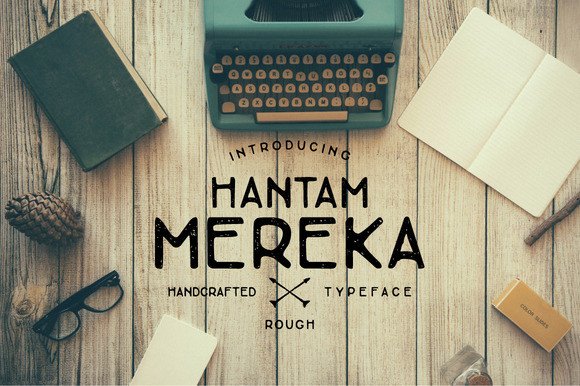
The visual characteristics of Hantam Mereka are what make it immediately distinct. Unlike the polished, geometric sans serif fonts that dominate modern web design, this font embraces imperfection. Its edges carry a deliberate roughness, a texture that feels hand-stamped or physically distressed. The letters themselves are basic—almost primitive in their construction. No flourishes, no stylistic frills. Just straight-ahead, functional letterforms with a worn-in finish.
This contrast is what gives the font its personality. A typical sleek sans serif says “clean” and “corporate.” A delicate serif font says “elegant” and “traditional.” Hantam Mereka says “we got our hands dirty building this.” It carries the visual weight of a workshop, a garage band, or a street-level brand that refuses to be polished into submission. For designers, entrepreneurs, and content creators who need to convey authenticity over perfection, this rough texture is a massive asset.
Think of it as a display font that doesn't try to hide its scars. The simple construction of the glyphs means the rough texture is the star of the show. There is no detailing cluttering the form. Every letter is a solid, recognizable shape, and the texture adds a layer of tactile realism that is hard to achieve with standard digital fonts. It feels like a cool physical object that was scanned into your computer, not one that was born in a sterile vector editor.
Where Hantam Mereka Shines Best (And Where It Definitely Does Not)
Understanding the strengths of a font means also understanding its limitations. Hantam Mereka is a specialized tool, and using it outside its natural habitat will feel forced. Here is where it delivers the highest impact:
- Branding and Identity: This font is a natural fit for logo design in industries that trade on authenticity. Craft breweries, independent coffee roasters, motorcycle repair shops, barbershops, tattoo studios, and streetwear brands can all benefit from its raw character. It immediately sets a tone that says “We are not a faceless corporation.”
- Editorial and Publishing: Perfect for magazine covers, article headers, and pull quotes in publications focused on music, skateboarding, automotive culture, or alternative lifestyles. When paired with a clean body text serif or sans serif, the contrast creates a powerful visual hierarchy. The headline in Hantam Mereka screams for attention, while the body text calmly delivers the content.
- Packaging Design: If you are designing a product that needs to stand out on a crowded shelf, this font provides instant stop-power. Limited edition products, small-batch goods, and anything with a “handmade” story benefits from the tactile, rough aesthetic. It communicates a physical presence that standard fonts lack.
- Digital and Social Media: For YouTube thumbnails, Instagram poster graphics, and podcast cover art, Hantam Mereka cuts through the noise. In a feed full of perfect, airbrushed designs, a rough, loud headline forces the viewer to stop scrolling. It works exceptionally well for gamers, musicians, and creators who want a gritty, unpolished brand voice.
- Merchandise and Apparel: T-shirt designs, hat logos, and sticker packs. The rough texture fits perfectly with screen printing and sublimation, often mimicking the natural wear of printed garments.
Where to avoid it: Do not use Hantam Mereka for long-form body copy, legal documents, or any project requiring high levels of extended readability. Its strength is impact, not reading comfort. Avoid it for corporate branding, finance, luxury goods, or any identity that requires a soft, elegant, or trustworthy feel. It belongs in the mud, not on a marble pedestal.
Mastering the Trade-Off Between Readability and Visual Hierarchy
Every designer faces the same challenge: how do you make something visually interesting without sacrificing communication? Hantam Mereka solves this problem by clearly defining its role in the visual hierarchy. It is a primary voice, not a supporting one. Use it to anchor the design and establish the mood.
The basic letter structures actually help with readability at larger sizes. Because the forms are simple, the roughness does not obscure the legibility. You can still clearly read the word, but you feel the texture of it. This is a distinct advantage over highly decorative or script fonts, which can often lose clarity when scaled up or down. A rough sans-serif like Hantam Mereka is fundamentally legible; it is just dressed in work clothes.
For brand perception, using a font like this communicates a high level of intention. It tells your audience, “We didn't just pick the default. We picked the font that matches our physical product.” This builds trust with a demographic that values authenticity. While a perfect serif font might feel generic, a rough commercial font that perfectly captures the brand's ethos feels like a custom design asset. It elevates the entire brand identity from “template” to “crafted.”
Audience engagement with a typeface like this is often polarizing—and that is a good thing. For the target audience (skaters, musicians, craft enthusiasts, independent business owners), it builds an immediate connection. It signals a shared understanding of taste. For those outside that group, it might feel aggressive or unrefined. This is exactly the filtering effect a strong brand needs. You do not want to appeal to everyone. You want to deeply resonate with your specific tribe.
Practical Steps for Pairing and Testing Hantam Mereka
Before you commit to a font for a major project, you owe it to yourself to stress-test it. Hantam Mereka requires careful consideration to work its magic. Here is a practical checklist:
- Evaluate the Glyph Set: The description of “very basic letters and punctuation” is honest. Check the lowercase letters, numerals, and special characters. Is there an ampersand you like? Does it include the accented characters you need? Knowing the limitations of the character set upfront prevents headaches later.
- Test Font Pairings: Never use two rough fonts together. The result is visual noise. The golden rule for Hantam Mereka is contrast. Pair it with a clean, neutral sans-serif font like Montserrat, Open Sans, or Helvetica for body text and secondary headlines. For high drama, pair it with a thin, elegant serif font like Playfair Display. The rough meets the refined—it is a classic design tension that works beautifully in editorial and packaging design.
- Print Physical Mockups: A rough font looks one way on a bright screen. Print it. Put it on a label. See how it interacts with different paper stocks and textures. You might find it looks even better slightly under-inked or on newsprint, which plays up its rugged personality. This is an essential step for packaging design.
- Check Licensing for Commercial Use: Hantam Mereka is a premium font (or potentially a free-for-personal-use font). Treat it as a commercial font. If you are using it for a logo, a product line, or a brand identity, ensure you purchase the correct license for commercial use. Building an entire brand around a typeface you cannot legally use in your key assets is a mistake that can cost you time and money later. Foundries usually offer desktop, web, and app licenses. Match the license to your actual usage.
- Readability Under Duress: Test the font at the smallest size you intend to use it. Can you read it at 14pt in a social media graphic? At 24pt on an A5 flyer? The lack of polish means it can degrade quickly at small sizes. Reserve it for headline work and hero elements where it can breathe.
Should This Be a Core Part of Your Brand Identity?
Choosing a typeface for your brand identity is one of the most significant design decisions you will make. Hantam Mereka is not an easy, safe choice. It is a commitment. If your brand story is rooted in craftsmanship, rebellion, street culture, or raw authenticity, this font can become your most powerful visual asset. It gives your audience something to hold onto—a texture, a feeling, a voice that is distinct from the polished competition.
Think of it as an ingredient, not the whole meal. If you are a content creator building a brand around outdoor survival, you can use it in your logo and video titles. If you are a small business owner launching a hot sauce line, it is the perfect companion for your label. It builds consistency by establishing a very specific, unwavering tone. You cannot water it down. That is the beauty of it.
Ultimately, Hantam Mereka succeeds when it becomes more than just a font. It becomes a statement. It tells your audience that you value substance over superficial polish. If that matches your project’s DNA, you have found a typeface that will work harder for you than a hundred generic alternatives ever could. Test it, pair it carefully, respect its limitations, and let it speak with the volume and texture it was built for. You might be surprised by just how much personality a set of “basic” letters can actually hold.