Better and Better: A Modern Calligraphy Typeface for Streamlined Creative Workflows
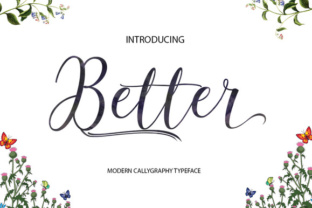
Choosing the right typeface is often the difference between a project that feels finished and one that feels truly polished. For designers, marketers, and content creators, a font is not just a stylistic choice—it’s a functional asset that carries tone, guides attention, and supports the entire message. Better and Better is a modern calligraphy typeface designed to bring a natural, handcrafted elegance to digital and print work without sacrificing usability. Its flowing strokes and balanced proportions make it equally suited for a wedding invitation and a startup’s brand identity. More than just a pretty face, this typeface fits into real workflows, helping you move from concept to final output with less friction and more consistency.
What Makes Better and Better Distinct?
Unlike many script fonts that lean heavily into ornate flourishes or overly casual handwriting, Better and Better strikes a deliberate balance. The letterforms are based on modern calligraphy principles: each character has a natural rhythm, with varied stroke widths that mimic the pressure of a dip pen. Yet the overall appearance remains clean and readable, even at smaller sizes for body text alternatives or subheadings. The typeface includes a full set of uppercase and lowercase letters, numerals, punctuation, and multilingual support, making it viable for international audiences.
From a workflow perspective, this distinct style eliminates the need to manually create calligraphy elements in vector software. Instead of spending hours drawing custom lettering for each project, you can set text in Better and Better and achieve a consistent, professional hand-lettered look across multiple deliverables. That time savings directly impacts your planning phase, allowing you to allocate more resources to layout, composition, and refinement.
Integrating Better and Better Into Your Design Process
The true value of a typeface emerges when it becomes a reliable part of your toolkit. Here’s how Better and Better fits into the stages of a typical project—before, during, and after execution.
Before the Project: Preparation and Asset Selection
When you begin a new branding or collateral project, the first step is often a mood board or style tile. At this stage, you evaluate typefaces against the desired tone. Better and Better serves well for projects that need warmth, approachability, or a handcrafted feel. Because the font is available in OTF, TTF, and often Web formats, you can install it across design software like Adobe Illustrator, Photoshop, Figma, Canva, and even Microsoft Office. This compatibility means you can test it in mockups without file conversion issues.
During preparation, consider pairing Better and Better with a clean sans-serif for body text. For example, a light weight of Inter or Open Sans contrasts nicely with the calligraphy strokes. This pairing strategy ensures legibility in long-form content while preserving the decorative impact for headings and logos. Keep the pairing simple—one script, one neutral—to maintain hierarchy without visual competition.
During the Project: Execution and Iteration
As you build the layout, use Better and Better for elements that require emphasis: main headlines, pull quotes, logotypes, and section dividers. Because the typeface includes standard ligatures and contextual alternates (depending on the version), you can enable OpenType features in your software to automatically produce more natural letter combinations. For instance, Illustrator and InDesign allow you to turn on “Discretionary Ligatures” or “Stylistic Alternates” to vary the look of repeated characters, preventing monotony in longer text blocks.
A practical workflow tip: set up paragraph and character styles early in your document. Assign Better and Better to a “Heading” style with tracking slightly loosened (+10 to +20) for headlines, and tighter (-5 to 0) for subheadings. This small adjustment improves readability at different sizes. For invitations or posters, test the font at various point sizes—calligraphy fonts often look best between 18pt and 72pt, but Better and Better retains clarity down to 14pt for short phrases.
After the Project: Output and Quality Control
Before final export, perform a visual check for spacing issues. Because calligraphy fonts can have wide swashes or ascenders, ensure your baseline grid and leading accommodate them. In print design, convert all text to outlines (or embed the font) to avoid substitution errors at the printer. For web use, consider using @font-face or Google Fonts alternatives if the license permits; otherwise, export images of calligraphy text. Better and Better’s clean curves hold up well in PNG at 2x resolution for retina displays.
Finally, archive your project files with the font file included (if license allows) or a note about which version was used. This practice supports long-term consistency when you revisit the project months later for updates or expansions.
Practical Use Cases Across Core Workflows
Better and Better is versatile enough to serve a wide range of common design and marketing tasks. Below are specific examples with workflow notes.
Branding and Logo Design
For small business owners and freelancers, a distinctive logo is often the first impression. Using Better and Better as the primary mark gives a handcrafted, boutique feel. Pair it with a geometric sans-serif for the tagline. When designing the logo, experiment with letter spacing (tracking) to create a unique silhouette—tight for a monogram-like look, or loose for an airy, modern feel. Because the typeface includes both standard and alternate glyphs, you can select specific characters (e.g., an alternate ‘g’ or ‘y’) to avoid generic results.
Invitations and Stationery
Event invitations are a natural home for calligraphy. Better and Better works well for save-the-dates, wedding invites, and party announcements. The process: set the main event text in the font, use a lightweight sans-serif for details (date, location, RSVP), and add decorative elements like swashes or ornamental glyphs if available. Many modern calligraphy fonts come with flourishes; if not, you can create simple vector swooshes to complement the type. For consistency across an entire stationery suite (invite, RSVP card, envelope liner), use the same font family with varying sizes and weights.
T-Shirt and Merchandise Design
When designing for apparel, the typeface must be legible at the scale of a chest print or sleeve graphic. Better and Better’s moderate stroke contrast avoids thin lines that might break in screen printing. For best results, use a single or two-color design—calligraphy naturally creates visual interest without heavy illustrations. Simulate the final size in your design software (100% scale at 12 inches wide) to ensure no delicate strokes disappear. For embroidery, request a digitized version with simplified paths, but for most screen printing, the vector outlines from the font work perfectly.
Social Media Graphics and Digital Content
Marketers and content creators can use Better and Better to add personality to quote cards, Instagram stories, and YouTube thumbnails. Because digital consumption favors bold, readable text, keep calligraphy for short phrases only (10 words or fewer). Use Canva or Photoshop to layer the font over a soft background image, then add a subtle drop shadow or outline for contrast. For video titles, render the text as an image to avoid font rendering issues across platforms.
Book Covers, Brochures, and Posters
In longer documents like brochures or book covers, Better and Better excels as a display face for the title or chapter opening. The workflow: design the cover in layers—background, image, title in calligraphy, subtitle in sans-serif. For brochures, use the script for headers on each panel, but avoid setting more than two lines in the font to maintain readability. Posters benefit from large, bold calligraphy text; pair it with a crisp body font for event details.
Planning for Consistency and Long-Term Use
To make Better and Better a sustainable part of your toolkit, consider a few organizational strategies. First, create a font library folder on your cloud storage or local drive with the font files, a license copy, and a style guide for each project where you use it. This habit prevents lost files and ensures team members can access the correct version.
If you work with a brand that uses multiple designers, document the exact font weight, tracking, and pairing for every application. For example: “Primary script: Better and Better, size 36pt, tracking +15, color #2c2c2c. Paired with Body: Inter Regular 12pt, leading 18pt.” This level of detail reduces miscommunication and speeds up onboarding for new collaborators.
Quality control also involves checking font updates. Commercial fonts occasionally receive revisions; subscribe to the foundry’s newsletter or check the download page annually to ensure you’re using the latest version. Updated glyphs can improve kerning and add missing characters.
Observations on Efficiency and Consistency
Typefaces like Better and Better are valuable not only for their aesthetic but for the efficiency they bring to a process. Instead of commissioning custom calligraphy for each project—which can take hours of back-and-forth and revisions—you have an off-the-shelf solution that maintains a professional, cohesive look. The font’s built-in alternates and ligatures simulate the variation of hand lettering without extra effort.
Because the typeface is designed for modern workflows, it works seamlessly with both vector-based and pixel-based tools. You can scale it to billboard sizes or use it for small web banners without quality loss, provided you export appropriately. The time saved in the sketching and roughing stages can be reinvested into fine-tuning layout, color, and hierarchy—factors that ultimately make the final product stand out.
Over time, you’ll develop an intuitive sense of when to reach for Better and Better. Perhaps it becomes your go-to for client projects that need a personal touch, or for your own side projects where you want to experiment with a handcrafted voice. The key is to treat the typeface as a functional tool rather than a decorative afterthought. Plan for it, test it early, and integrate it with a system of complementary fonts and assets.
In a world where visual communication is faster than ever, having a reliable modern calligraphy typeface can streamline your creative process and deliver consistent, high-quality results across multiple channels. Better and Better offers that combination of personality and practicality, making it a smart addition to any designer’s or content creator’s arsenal.