Promenades: A Font Born from a Walk in Bruges and What It Means for Your Strategic Communication
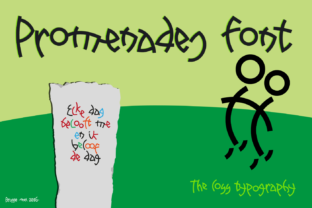
In May 2016, a designer walking through the medieval streets of Bruges, Belgium, noticed something unusual carved into a stone beside the road. The lettering wasn’t a formal inscription or a corporate logo—it was a handwritten style that felt spontaneous, genuine, and deeply tied to the place. That chance encounter sparked the creation of Promenades, a font that replicates that original hand-lettered look and makes it available for digital use. But Promenades is more than a decorative typeface. For entrepreneurs, marketers, creators, and decision-makers who understand the power of intentional design, it can become a strategic tool for shaping perception, reinforcing brand messages, and creating emotional resonance.
This article explores how Promenades fits into a thoughtful communication strategy, where it adds the most value, and what you should consider before using it. Whether you are planning a website redesign, developing a brand identity, or looking for ways to stand out in a crowded marketplace, understanding the role of a distinctive font like Promenades can help you make better decisions and achieve more meaningful outcomes.
Why Promenades Deserves a Place in Your Typography Toolkit
Typography is rarely neutral. Every typeface carries associations, emotions, and cultural weight. Promenades, with its roots in a handwritten inscription from a historic city, evokes authenticity, craftsmanship, and a sense of discovery. It feels personal rather than mass-produced. For brands and professionals who want to communicate warmth, individuality, or a connection to place, Promenades can be a deliberate choice that supports those goals.
Consider the difference between a standard sans-serif font and Promenades. The former often conveys efficiency, modernity, and clarity. The latter suggests human touch, imperfection, and story. If your objective is to position your business as approachable, artisanal, or tied to a specific cultural heritage, Promenades can help signal that without a single word of explanation. It becomes a visual shorthand for values like care, tradition, and authenticity.
From a planning perspective, choosing Promenades is not an aesthetic whim—it is a decision about how you want your audience to feel. When you align typeface with intent, you create consistency between what you say and how you say it. That alignment is at the heart of effective positioning.
Strategic Intent: Matching Font with Message
The most successful uses of Promenades come from a clear understanding of the message you are trying to convey. If your brand or project centers on travel, local culture, handcrafted products, or personal storytelling, Promenades can amplify that theme. A boutique hotel in a historic district might use it for signage, menus, or website headings to reinforce its connection to the local environment. A freelance photographer who specializes in candid, natural-light portraits could use Promenades for a logo or business card to mirror the unposed quality of their work.
However, strategic matching goes beyond surface-level theming. You need to consider the context in which the font will appear. Promenades works best in display roles—headlines, pull quotes, logos, and short text blocks. Its handwritten nature can reduce readability in longer passages, especially at small sizes. A smart communicator reserves Promenades for moments where emotional impact matters more than speed of reading. For body text, pair it with a clean, neutral font that provides contrast and maintains legibility.
Ask yourself: What is the primary action I want my audience to take? If the answer involves reading dense information, trust a more conventional typeface for that task. If the goal is to create a memorable first impression, Promenades can lead that effort. Strategic intent means knowing when to let the font stand out and when to step back.
When and Where to Use Promenades for Maximum Impact
Promenades is not a font for every occasion, but when used deliberately, it can elevate specific touchpoints in your customer experience. Consider these scenarios:
- Brand identities for lifestyle and hospitality businesses – A café, bed-and-breakfast, or artisan shop can use Promenades on storefront signage, packaging, and social media graphics. It creates a cohesive visual narrative that suggests slow living, quality, and personal attention.
- Creative portfolios and personal websites – Freelancers, illustrators, and writers can deploy Promenades for their name or key section headers. It adds a handcrafted feel that differentiates them from corporate templates.
- Limited-edition products and seasonal campaigns – A short-run product launch or a holiday promotion can benefit from the font’s unique character. Because it feels special, it aligns with scarcity and exclusivity.
- Invitations, event materials, and printed collateral – For weddings, workshops, or community events, Promenades lends an intimate, hand-lettered touch that digital-native fonts often lack.
When planning a project, map out the customer touchpoints where emotion and personality matter most. Those are the places to inject Promenades. For example, an online course about creative writing could use the font on the sales page headline and course certificate, but rely on a readable serif or sans-serif for lesson content. This hybrid approach respects the reader’s need for clarity while preserving the brand’s character.
Practical Considerations Before Committing to Promenades
Using Promenades without careful thought can undermine your goals. Here are key factors to evaluate before you integrate it into your work:
- Readability across devices and sizes – Test Promenades on mobile screens, in print at small point sizes, and on different browsers. If it becomes illegible, your message fails. Always prioritize user experience over style.
- Scalability for future needs – A font that works for a small blog may not suit a national advertising campaign. Consider whether Promenades can adapt as your brand grows. If not, treat it as a supplementary font rather than your primary one.
- Cultural and contextual fit – The font’s origin in Bruges gives it a European, historic flavor. That might be perfect for some audiences but feel mismatched for others. A tech startup in Silicon Valley might find it too nostalgic. A travel agency specializing in European tours would find it spot-on.
- Licensing and embedding restrictions – Verify that your license covers your intended use, especially for commercial web fonts, app interfaces, or merchandise. Mistakes can lead to legal issues and additional costs.
These considerations are not meant to discourage use but to encourage intentionality. A decision made with full awareness of trade-offs is more likely to produce the desired outcome.
Long-Term Value and Brand Consistency
Fonts contribute to brand recognition over time. When you consistently use Promenades in specific contexts, it becomes part of your visual identity. Customers begin to associate that handwritten style with your brand’s personality. This is a long-term asset if managed well.
To build that consistency, document guidelines for when and how to use Promenades. Specify which sizes are acceptable, what pairings work, and what applications are off-limits. Share these guidelines with anyone who produces content for your brand—designers, social media managers, printers. This prevents random or conflicting uses that dilute the effect.
Over months and years, the font can become a shorthand for your brand’s story. A travel blogger who uses Promenades for post titles and quote cards creates a visual thread that ties each article back to the core theme of discovery. A small-batch chocolate maker who puts Promenades on packaging reinforces the handmade, artisanal message every time a customer picks up a bar. That cumulative impression is hard to replicate with generic fonts.
Avoiding Common Pitfalls with Decorative Fonts
Decorative fonts like Promenades carry inherent risks if used without clear goals. Three frequent mistakes can undermine your strategy:
Overuse. When every element of a design uses a highly distinctive font, the result is chaotic and hard to read. The specialness of Promenades is lost if it appears everywhere. Use it sparingly to preserve its impact.
Mismatched audience expectations. A professional service such as a law firm or financial advisory would likely harm its credibility by using a handwritten font. The mismatch between the informal style and the serious subject creates cognitive dissonance. Always consider what your audience expects and whether the font supports or contradicts that expectation.
Ignoring accessibility. Users with visual impairments or reading difficulties may struggle with irregular letterforms. If your content must be accessible to all, never use Promenades for essential navigation or long body text. Offer alternative text versions if needed.
By anticipating these pitfalls, you can design around them. Use Promenades as an accent, not a default. Pair it with high-contrast backgrounds and adequate spacing. And always test with real users before finalizing a design.
Making the Decision: Is Promenades Right for Your Next Project?
Choosing a typeface is a strategic decision that affects how your message is received. Promenades offers a unique opportunity to inject personality and a sense of place into your communication. But its effectiveness depends entirely on context and execution.
Before using it, answer three questions:
- Does the font’s style align with the core message I want to send?
- Will my target audience interpret it as I intend, or could it create confusion?
- Have I planned for readability, scalability, and consistency across all touchpoints?
If the answers align with your goals, Promenades can become a powerful element in your visual toolkit. It is not a font for every job, but for the right job, it can make your work memorable, human, and connected to a story that began with a walk in Bruges.
The designers who digitized that carved inscription did so to share a piece of fleeting inspiration. As a communicator, you have the chance to carry that inspiration forward—intentionally, strategically, and with clear purpose.