Every Summer: Strategic Thinking Behind a Dynamic Display Font
Typography is often treated as a background decision, something you pick after the real work is done. But the typefaces you choose carry weight. They shape perception, set tone, and either reinforce or undermine your message before a single word is read. Every Summer, created by KlapauciusCo using brush and marker techniques, is a display font that brings a specific energy: loose, lively, and unmistakably seasonal. The question is not whether it looks good—it clearly does—but whether it serves your goals in a way that justifies its personality. This article walks through the strategic considerations that matter before you commit to any bold typographic choice.
Understanding What Every Summer Brings to Your Toolkit
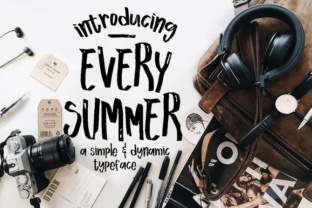
At first glance, Every Summer reads as fun, casual, and handcrafted. It was built with analog tools—a brush and a marker—which gives it texture, irregularity, and warmth that digital-first fonts often lack. That handmade quality is valuable in an era where audiences increasingly respond to authenticity and imperfection over polished uniformity. The font carries a sense of movement, as if each letter was drawn quickly in response to sunlight and sudden inspiration. That emotional register matters when you are trying to connect with people on a human level rather than a corporate one.
Strategically, Every Summer works best when you need to signal approachability, spontaneity, or a break from formality. It is not a font for dense legal documents or annual reports. But for headlines, short taglines, social media graphics, event promotions, and packaging that needs to feel immediate and personal, it can be a deliberate choice rather than a decorative afterthought.
The Craft Behind the Look
KlapauciusCo created Every Summer using physical brush and marker strokes, then digitized the results. That process leaves visible evidence of the hand that made it—ink variation, slight unevenness, organic curves. This is not a font that pretends to be perfect, and that is precisely its strength. For creators and small business owners who want to communicate that their brand is built by real people, not algorithms, this kind of typography reinforces the message at a subconscious level.
Matching Font Personality to Audience and Context
The most common mistake people make with distinctive fonts is using them everywhere. A font like Every Summer has strong personality, and personality can quickly become noise if it is not paired with thoughtful restraint. The key is to ask: who is my audience, what do they need to feel when they encounter this message, and does this font support that feeling or compete with it?
- For entrepreneurs and small business owners launching a seasonal product line or limited-time offer, Every Summer can signal urgency and joy without feeling aggressive. It says "this is fun, and you want to be part of it."
- For educators and hobbyists creating workshop materials, camp flyers, or community event signage, the font's hand-drawn quality implies a personal invitation rather than a mass broadcast.
- For marketers and publishers working on summer-themed content, the font anchors the visual identity in a specific emotional season. It helps audiences transition mentally into a different mode of engagement.
- For freelancers and creators building a brand identity around warmth, creativity, and human connection, Every Summer can become a signature element that distinguishes their work from templated competitors.
However, context matters as much as audience. If your audience skews toward conservative industries—finance, law, healthcare, traditional education—a display font with this much character may feel out of place even in seasonal materials. The strategic decision is not whether you like the font, but whether it helps your audience trust what you are saying.
Practical Scenarios Where Every Summer Performs Well
Rather than applying Every Summer broadly, identify the specific touchpoints where its energy adds value. Display fonts are most effective when they lead the eye and then step aside. Here are several scenarios where the font can support your goals without overwhelming them.
Seasonal Campaigns and Limited-Time Offers
If you run a business that follows seasonal cycles—ice cream shops, beach rentals, summer camps, outdoor gear retailers, event planners—the font's name alone aligns it with the feeling you want to invoke. Using Every Summer for headlines, banners, and promotional materials reinforces the temporal nature of the offer. It creates a visual shorthand for "this moment will not last, so act now."
Social Media Graphics and Short-Form Content
Social feeds are crowded, and most users scroll past text-heavy images. Every Summer works well for single-line quotes, calls to action, or event announcements where you need to stop the scroll with something that looks human-made. Pair it with a clean sans-serif body font to maintain readability while letting the headline carry the emotional weight.
Packaging and Product Labels
For small-batch products, handmade goods, or artisanal foods, the font's brush-and-marker origin suggests the same care went into the product itself. A label that uses Every Summer for the product name feels less like mass production and more like something made in a small kitchen or studio.
Event Materials and Invitations
Whether you are planning a community gathering, a workshop, a launch party, or a family reunion, the font adds a festive, informal tone. It works especially well on posters, flyers, and digital invitations where the goal is to communicate enthusiasm rather than formality.
What to Watch For When Using a Bold Display Font
Every design choice carries tradeoffs. Every Summer is not a neutral tool, and using it without clear intent can create problems that undermine your communication. Being aware of these risks helps you decide when to lead with the font and when to save it for smaller accents.
Readability at small sizes. Because the font was created with brush and marker, its letterforms have natural variation in thickness and angle. At display sizes, this looks energetic and intentional. At small sizes—below 18 points in print or 24 pixels on screen—it can become difficult to read, especially for longer strings of text. Reserve it for headlines, short phrases, and focal points.
Overuse dilutes impact. If every piece of content in your brand uses Every Summer, the font stops being a special accent and becomes the baseline. That reduces its power to signal anything specific. Consider using it in specific contexts (seasonal campaigns, social headers, product names) and pairing it with a simpler, more neutral font for body copy and navigation.
Cultural and seasonal alignment. The font carries strong summertime connotations. If you use it year-round without adjusting the supporting visuals, audiences may perceive a disconnect. Plan for how the font fits into a broader visual system that evolves with seasons or campaigns rather than staying static.
Accessibility considerations. Display fonts with high contrast between thick and thin strokes can create accessibility issues for readers with visual impairments or dyslexia. If your content must meet accessibility standards, limit Every Summer to decorative elements and ensure that all critical information is communicated in a more readable typeface.
Making the Bonus Photos Part of a Cohesive System
One notable aspect of the Every Summer package is the inclusion of the photos used to create the preview images. This is not just a bonus—it is a strategic resource if you approach it deliberately. The photos were selected to complement the font's mood, and using them together can create a unified visual language that saves you time on sourcing imagery.
However, simply dropping these photos into your materials without adaptation can lead to a generic look if the images are widely recognized. Instead, treat the photos as a starting point. Crop them, overlay text in Every Summer, adjust colors to match your brand palette, or combine them with original photography that extends the same aesthetic. The goal is to build a visual system where the font and the images reinforce each other rather than competing for attention.
For small business owners and freelancers who do not have access to professional photography, these bonus images can serve as placeholder assets while you develop a more custom library. Use them for social media templates, email headers, or early-stage campaign mockups, then replace them as your brand evolves.
Thinking Long Term About Seasonal Design Assets
A font like Every Summer can be part of a sustainable design strategy if you plan for its role across multiple cycles. Rather than treating it as a one-off novelty, consider how it fits into a yearly content calendar. For example, you might use it for summer promotions each year, or you might rotate it in alongside other display fonts for different seasons—a winter font with a colder, cleaner feel, a spring font with floral lightness, and so on.
This approach requires discipline. It is tempting to use a font you love in every context because you enjoy looking at it. But long-term brand consistency depends on predictability. Audiences learn to associate certain visual cues with certain messages. If Every Summer always appears in summer campaign materials, it becomes a signal that the audience can recognize before they even read the words. That kind of recognition is hard to build and easy to dilute.
Also consider how the font will age. Trend-driven typefaces can feel dated after a few years. Because Every Summer is rooted in analog techniques rather than a specific digital trend, it has a better chance of aging gracefully. But if your brand relies heavily on it, revisit the decision annually. Ask whether the font still communicates what you intend, or whether it has started to feel like a default rather than a choice.
Building a Font Pairing Strategy
To use Every Summer effectively over the long term, pair it with a complementary typeface that handles the heavy lifting of body copy, captions, and navigation. A clean sans-serif like Open Sans, Lato, or Work Sans provides contrast without competing for attention. A neutral serif like Merriweather or Source Serif can add a touch of sophistication when the context demands it. The pairing should feel intentional, with the body font providing stability and Every Summer providing personality.
Making Intentional Choices Rather Than Random Ones
The difference between a font that strengthens your message and one that distracts from it comes down to intent. Every Summer is not a safe choice, but it can be a smart one if you understand what it communicates and where it fits. Ask yourself these questions before committing:
- What specific feeling am I trying to create for the audience?
- Does this font support that feeling, or does it add a layer of meaning I did not intend?
- Where in the customer journey will this font appear—at the point of first impression, during consideration, or at checkout?
- How does this font interact with my other brand assets, including colors, imagery, and other typefaces?
- If I use this font today, will I still be comfortable with it six months from now?
Fonts are tools, not identities. Even a font as distinctive as Every Summer should serve your goals rather than define them. When applied strategically, it can help you cut through visual noise, build emotional connection, and create materials that feel human in an increasingly automated world. When applied randomly, it can confuse your message and erode the consistency that builds trust over time.
The bonus photos that come with the font are an asset, but they are not a shortcut. Use them as part of a deliberate visual system, not as a substitute for one. Pair the font with supporting typefaces that do not compete. Limit its use to the moments where it will have the most impact. And revisit your choices regularly to ensure they still align with where you are going, not just where you have been.
If you approach Every Summer with the same strategic thinking you apply to your pricing, your product development, and your customer experience, it becomes one more tool that helps you communicate more effectively. That is the difference between picking a font because it looks fun and using it because it serves a purpose.