Paramount: A Script Font That Balances Elegance and Versatility Across Design Projects
Typography often dictates the emotional tone of a design. A rigid, geometric sans-serif can feel cold or corporate, while a delicate handwritten script can bring warmth, personality, and movement. But finding a font that bridges the gap between expressive character and practical utility is rare. Paramount, created by the type designer Jokiranta, achieves exactly that. This script font carries a fresh, versatile quality that gives designers genuine freedom without sacrificing readability or coherence. And with two distinct variations—Paramount Script and Paramount Sans—it becomes more than just a single typeface; it becomes a flexible system for cohesive branding, editorial work, and digital design.
What Makes Paramount Stand Out as a Script Font
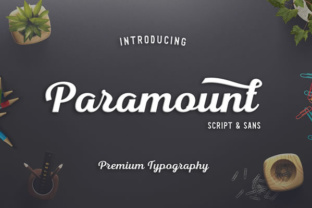
At first glance, Paramount Script presents itself as a beautiful, flowing typeface with natural letterforms that feel neither forced nor overly ornamental. Jokiranta has crafted each character with attention to rhythm and spacing, so the font reads smoothly whether it appears in a short headline or a longer passage of display text. The strokes carry a handcrafted sensibility, but the overall structure remains disciplined enough for professional use.
Many script fonts fall into one of two traps: they are either too decorative to be legible at smaller sizes, or they are so restrained that they lose the very charm that drew you to them. Paramount avoids both pitfalls. The letterforms maintain consistent weight distribution, and the connecting strokes feel organic rather than mechanical. This makes it suitable for everything from wedding invitations and luxury branding to social media graphics and product packaging.
Another key characteristic is the font's versatility across different contexts. A single script typeface can quickly become repetitive, but Paramount's design includes enough variation in character shapes and alternate glyphs to keep compositions interesting. You can use it for a bold, sweeping headline, then pair it with itself in a lighter weight for subtext without losing visual harmony.
Two Variations, One Cohesive System
One of the most compelling aspects of Paramount is that it does not stop at a single script option. The inclusion of Paramount Sans transforms this from a standalone font into a complete typographic toolkit. This is not merely a sans-serif companion that happens to share a name; it is purpose-built to complement the script variation in weight, proportion, and overall feel.
Paramount Sans carries a clean, modern aesthetic with enough personality to stand on its own, yet it steps back gracefully when paired with its script counterpart. For designers working on brand identity projects, this is invaluable. You can use Paramount Script for the logo or hero text, then switch to Paramount Sans for body copy, taglines, or product descriptions. The result is a consistent brand voice that feels intentional rather than cobbled together from unrelated fonts.
Consider a scenario where you are designing a luxury skincare brand. The script variation can convey sophistication and a handcrafted ethos on the product name and key messaging. Meanwhile, Paramount Sans handles ingredient lists, usage instructions, and website copy with clarity and understated elegance. The transition between the two feels natural because they share underlying structural principles, even though their visual personalities differ.
Practical Applications Across Industries and Projects
Paramount's versatility means it fits comfortably into a wide range of design workflows. Here are some specific scenarios where it performs particularly well:
- Branding and logo design: The script variation brings a distinctive, memorable quality to logotypes, especially for businesses in fashion, beauty, hospitality, and creative services. The sans companion ensures consistency across business cards, letterheads, and digital assets.
- Wedding and event stationery: Save-the-dates, invitations, place cards, and menus all benefit from the romantic yet readable nature of Paramount Script. It avoids the overly fussy look that can make wedding typography feel dated.
- Social media and content marketing: Instagram quotes, YouTube thumbnails, and promotional graphics need typography that grabs attention without overwhelming the visual. Paramount works well at display sizes and remains legible on mobile screens.
- Packaging design: Product packaging often requires a balance of aesthetic appeal and information hierarchy. The script handles the brand name or product line, while the sans variant lists ingredients, weights, or barcodes cleanly.
- Editorial and magazine layouts: For feature headlines, pull quotes, or section openers, Paramount Script adds a human touch to otherwise structured layouts. It pairs well with neutral serif or sans-serif body fonts, but using Paramount Sans for subheads keeps the system unified.
How Paramount Fits Into Modern Design Workflows
Modern designers juggle multiple tools, platforms, and output formats. A font must perform reliably across print, web, and mobile contexts, and Paramount delivers on this front. The typeface includes standard OpenType features such as ligatures, stylistic alternates, and contextual swashes, which give you control over how letter pairs connect and how certain characters appear.
These features matter in real-world use. When you set a headline in Paramount Script, you can activate ligatures to create smoother transitions between problematic letter combinations, avoiding awkward gaps or clashing strokes. Stylistic alternates let you choose a different version of a letter—perhaps a more flourished capital or a simplified lowercase—depending on the mood you want to strike.
For web designers, Paramount's legibility at medium sizes is a significant advantage. Many script fonts become nearly unreadable below 24 pixels, but Paramount maintains clarity down to around 18 pixels in its script variation, and even smaller in the sans version. This means you can use it for navigation labels, buttons, or short calls-to-action without resorting to a fallback font.
File format support is also standard. Paramount comes in widely compatible formats, making it easy to install across operating systems and use within Adobe Creative Cloud, Figma, Sketch, Canva, or any other design platform you prefer. No special workarounds or conversion steps are required.
What to Consider Before Choosing Paramount for Your Project
No font is a universal solution, and Paramount is no exception. Before committing to it for a project, consider the following factors to ensure it aligns with your specific needs.
Project tone and audience. Paramount Script carries an elegant, somewhat refined personality. It suits brands and projects that want to convey quality, craftsmanship, or a personal touch. If your project calls for an edgy, industrial, or minimalist aesthetic, a different typeface may be more appropriate. However, Paramount Sans can stretch into more neutral territory if needed.
Pairing with other typefaces. While Paramount Script and Paramount Sans work beautifully together, you might want to incorporate a third typeface for extended body text or data-heavy layouts. In that case, choose a neutral serif like a classic Garamond or a straightforward sans-serif like Open Sans to avoid clashing personalities. The key is to let Paramount be the star while supporting it with simpler companions.
Licensing and usage scope. Always check the licensing terms for the specific version of Paramount you intend to use. Some font distributors offer desktop licenses for print and static images, while web licenses cover embedded use on websites. If you are designing for a large brand or a high-traffic digital product, confirm that your license covers commercial use at scale.
Language and character support. If your project requires extensive multilingual content, verify that Paramount includes the necessary diacritics and special characters. Many script fonts have limited language support due to the complexity of designing connecting letterforms across different alphabets.
Practical Recommendations for Using Paramount Effectively
To get the most out of Paramount in your designs, consider a few practical strategies:
- Use tracking and kerning thoughtfully. Script fonts often need slight tracking adjustments to avoid collisions between letters. In Paramount Script, a small amount of positive tracking can improve readability at smaller sizes, while negative tracking can create a tighter, more luxurious feel for large headlines.
- Leverage color and contrast. Paramount's details shine when placed against a contrasting background. A dark charcoal or deep navy backdrop makes the lighter strokes of the script pop, while a soft pastel background keeps the overall look gentle and approachable.
- Mix weights within the same family. If Paramount includes multiple weights (light, regular, bold), use them to create hierarchy without introducing a new typeface. A bold script headline with a light script subheadline feels cohesive and deliberate.
- Avoid overusing swashes. It can be tempting to activate every stylistic alternate and swash, but restraint often yields better results. Use flourishes sparingly—perhaps on the first letter of a headline or on a single word in a logo—to maintain elegance without visual clutter.
Observing Paramount in the Broader Typography Landscape
The design community has seen a resurgence of interest in script and handwritten typefaces over the past several years, driven partly by a desire for authenticity in digital spaces. Audiences increasingly respond to typography that feels human rather than machine-generated. Paramount occupies a sweet spot in this trend: it is clearly hand-drawn in inspiration but refined enough to meet professional standards.
Compared to other popular script fonts like Pacifico, Great Vibes, or Playlist, Paramount offers a more structured and versatile approach. Where some scripts lean heavily into casual or retro aesthetics, Paramount maintains a timeless quality that works across contemporary and classic design contexts. The addition of the sans variation further sets it apart, giving it a practicality that many standalone scripts lack.
For designers who value efficiency, having a matched script-and-sans pair reduces decision fatigue. Instead of spending time searching for a complementary body font, you can rely on Paramount Sans and trust that it will harmonize with your primary script. This streamlines the design process and reduces the risk of mismatched typography.
Final Thoughts on Designing With Paramount
Paramount by Jokiranta is a thoughtfully constructed font system that delivers both aesthetic appeal and functional versatility. Whether you are crafting a brand identity from scratch, designing elegant event materials, or building a cohesive social media presence, the combination of Paramount Script and Paramount Sans gives you the freedom to express a distinct visual voice without compromising on clarity or coherence.
The font's success lies in its balance—between decoration and legibility, between uniqueness and usability, between the handcrafted and the polished. For designers seeking a script font that can carry a project from concept to completion, Paramount deserves serious consideration. Its two-variation structure, practical OpenType features, and broad suitability across industries make it a valuable addition to any typographic toolkit.
When you choose a typeface, you are choosing the voice of your design. Paramount speaks with elegance, confidence, and warmth. And that is a voice worth listening to.