Lavender: A Script Font That Blends Romance with Readability
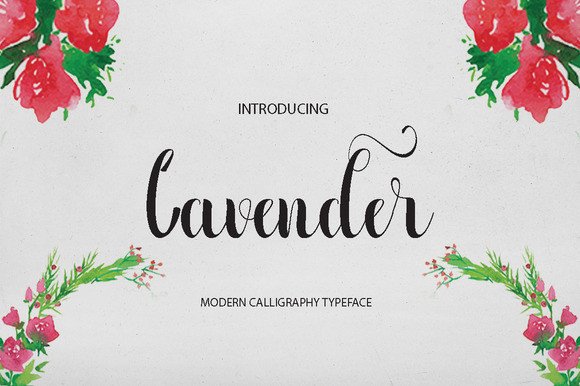
When you think of script fonts, what comes to mind? Perhaps elegant loops, flowing strokes, and a touch of nostalgia. But not all script fonts are created equal. Many lean too far into flourish, sacrificing clarity for charm. Others feel too rigid, losing the personality that makes script typography so appealing. Enter Lavender — a font that bridges this gap with remarkable poise. It manages to be both beautiful and neat, offering a quaint, tidy appeal thanks to its steady baseline. For anyone working on romantic or springy design projects, Lavender is a powerful tool in your typographic arsenal.
This article explores what makes Lavender distinct, its practical strengths, and how you can integrate it into your work, whether you are a professional designer, a small business owner, or a hobbyist crafting something special. We will focus on real-world relevance, examining its characteristics, advantages, and the thoughtful considerations that come with using a script font of this caliber. Let's begin.
The Design Anatomy of Lavender: Steady Baseline, Timeless Appeal
To understand why Lavender stands out, you need to look under the hood at its design anatomy. The term “steady baseline” is not just a technical detail; it is the core of the font’s readability. Many script fonts have an uneven, unpredictable baseline that, while artistic, can make reading a block of text a tiring experience. The steady baseline of Lavender ensures that letters sit consistently on the line, creating a rhythm that guides the reader's eye smoothly across words. This is a rare achievement for a script typeface.
The “quaint and tidy appeal” of Lavender emerges from its careful balance of curves and spacing. The letters are not overly ornate. Instead, they are crafted with a clean, deliberate stroke that feels both vintage and fresh. It has the charm of old-fashioned handwriting but with a modern precision that suits contemporary design. The lowercase letters flow naturally into each other, while the uppercase forms offer a gentle, elegant emphasis without looking ostentatious. This combination makes Lavender a versatile choice: it can whisper romance in a wedding invitation or shout optimism in a springtime promotion. Its beauty lies in its restraint and in the tidy consistency of its letterforms, making it a script font that designers can actually rely on for extended use.
Lavender's Advantage: Readability Without Sacrificing Personality
The single greatest advantage of Lavender is that it solves the eternal trade-off between personality and legibility. Script fonts are often relegated to short display uses — a single word logo, a headline, a pull quote — because longer passages become difficult to parse. But the design of Lavender intentionally resists this limitation. Its steady baseline and tidy structure allow it to function effectively in subheadings, short paragraphs, and even body copy at larger sizes.
Consider the psychology of a spring-themed brand. A farm-to-table restaurant launching a seasonal menu might want a font that feels natural, warm, and handcrafted. A font that is too rigid (like a geometric sans-serif) would feel cold. A font that is too messy (like a wild brush script) would feel chaotic. Lavender sits in the sweet spot, offering the handcrafted warmth of a script with the discipline of a well-drawn typeface. This makes it especially useful for brand identity projects where the font needs to carry personality across various touchpoints: from the logo and website headers to menu cards and social media captions. The font does not break down under repeated use, which is a mark of thoughtful design.
Practical Applications for Every Creative Professional
One of the most practical aspects of Lavender is its wide adaptability across different media. Here are several specific use cases that highlight its strengths:
Wedding and Event Stationery
This is perhaps the most natural application. Lavender excels on save-the-date cards, invitation suites, thank-you notes, and seating charts. Its romantic undertones complement floral motifs and soft color palettes of blush, ivory, sage, and gold. Because it is legible at a range of sizes, you can use it for the couple's names in large script and for the event details in a smaller, readable style. It eliminates the need to juggle multiple scripts for different elements, streamlining the design process. For professional stationery designers, Lavender can be a go-to typeface for clients who want elegance without the fussiness of overly ornate calligraphy fonts.
Spring and Floral Branding
Businesses that revolve around spring — such as florists, botanical skincare lines, garden centers, and organic cafes — can benefit from Lavender's natural cheerfulness. Its tidy appeal ensures that packaging, signage, and product labels look professional, not whimsical. A skincare brand might use Lavender for product names ("Rosewater Mist," "Lavender Dream") and pair it with a clean sans-serif for ingredients and directions. The contrast creates hierarchy while maintaining a cohesive, thoughtful look. The font's steady baseline is especially helpful on packaging, where text must wrap around 3D shapes; the consistency prevents that dizzying, off-kilter feeling that some scripts produce on curved surfaces.
Greeting Cards and Social Media Graphics
For independent card makers and content creators, Lavender offers a ready-made personality. Greeting cards for birthdays, weddings, or just-because notes can use the font prominently in the message. On social media, It can be used for quote overlays, promotional graphics, and story templates. Because of its tidy nature, it remains readable on mobile screens at various resolutions, which is a critical consideration for digital-first creators. Additionally, the font pairs beautifully with playful illustrations like wildflowers, birds, and watercolor washes—elements that are hallmark of springy design projects.
Children's and Educational Materials
Surprisingly, Lavender also holds potential in educational contexts. Its neat, steady baseline is reminiscent of handwriting models taught in schools. For early childhood materials, recipe cards for kids, or nature study guides, Lavender can make learning feel less intimidating. The font's friendly appearance invites the reader in, making it suitable for headings and short passages in activity sheets or storybooks. Just ensure the text size is large enough for young readers, as script fonts are generally better suited for display sizes in these applications.
Considerations When Working with Lavender
While Lavender is a versatile and well-drawn typeface, it is not a magic solution for every design challenge. Understanding its limitations ensures you use it to its fullest potential.
Pairing with Other Fonts
Script fonts, by nature, are heavy on personality. To avoid overwhelming a layout, it is wise to pair Lavender with a neutral, supporting typeface. Sans-serif fonts like Lato, Open Sans, or Montserrat create a clean contrast. Alternatively, a simple serif like Playfair Display or EB Garamond can add an extra layer of elegance for formal invitations. The key is to let Lavender serve as the accent — the star of the headline or the signature element — while the companion font handles the bulk of the reading. A common mistake is to pair two strong scripts; this creates visual noise and reduces legibility. Stick to a single script per layout, and let Lavender shine on its own.
Print Versus Digital Legibility
Lavender performs admirably in both print and digital environments, but the medium influences its optimal size. In high-resolution print (magazines, brochures, stationery), you can use Lavender comfortably at sizes as small as 14 or 16 points for short blocks of text. On screens, however, especially mobile devices, aim for a minimum of 20-24 pixels for headings and at least 18-20 pixels for any body-sized use. The steady baseline helps, but fine details in the letterforms can blur on lower-resolution displays. Always test the font in your final environment before settling on a size. If the script feels cramped, it is better to enlarge it than to risk readability.
Avoiding Overuse
Because Lavender is so appealing, there is a temptation to use it everywhere. Resist that urge. Overusing a script font in a single document can create a cluttered, amateurish impression. Apply Lavender deliberately: a main headline, a key phrase, the primary call-to-action. For captions, footnotes, or lengthy descriptions, rely on your paired sans-serif. Restraint is a mark of professional design, and it allows the beauty of Lavender to stand out rather than be drowned in repetition.
Integrating Lavender into Your Workflow
Whether you are using Lavender in Adobe Illustrator, Canva, or CSS on a web project, the process can be seamless. For graphic designers, downloading the OTF or TTF file and installing it is straightforward. In web design, you can either self-host the font files or use a service like Google Fonts if Lavender is available there (depending on the specific version you are using). If you are using a web font, define fallback fonts carefully — something like Lavender, 'Brush Script MT', cursive ensures that if the font fails to load, a similar style appears in the meantime.
For non-designers using tools like Canva or Cricut Design Space, Lavender is typically available through uploading or via the platform’s font library. When using it for cutting machines or print-and-cut projects, pay attention to the spacing and ensure that letters do not overlap unexpectedly. The tidy design of Lavender minimizes this issue compared to more ornate scripts, but it is always wise to test a sample cut or print before committing to a full run.
A Few Observations from the Design Community
As Lavender gains popularity, designers have noted its effectiveness in bridging the gap between “handwritten” warmth and “professional” precision. It has been used in projects ranging from high-end beauty branding to simple blog headers, and in each case, it brings a consistent personality. Many users mention that it does not feel like a novelty font; rather, it feels like a serious tool for projects that require an emotional touch. The steady baseline, once an overlooked technical feature, is now frequently cited as the font's defining strength. Designers appreciate that they can trust Lavender to deliver both character and clarity in a single package.
Another observation relates to its versatility across seasons. While it is undeniably perfect for spring and romantic themes, it also works well for autumn weddings, winter holiday cards (especially with evergreen or berry motifs), and even minimalist projects where a touch of warmth is needed. The key is the context. Paired with neutral backgrounds and careful color choices, Lavender adapts to the mood you create around it. It is not confined to one season; it simply shines brightest when the design purpose is to evoke tenderness, optimism, or gentle elegance.
Final Practical Advice
If you are considering adding Lavender to your type collection or using it in an upcoming project, start small. Experiment with a single headline or a logo mock-up. Test how it reads at different sizes, both on screen and in print prints. Try pairing it with three different sans-serif fonts to see which combination feels most balanced. Observe how the tidy baseline of Lavender influences the overall layout — does it bring a sense of calm? Does it make the message feel more personal? Those observations will guide you toward the most effective use cases for your specific needs.
Remember, a good font is not just a set of letters; it is a design partner. The best uses of Lavender happen when its characteristics — steady, quaint, neat, romantic — align with the goals of your project. Whether you are a professional designer refining a brand identity, a blogger creating a spring editorial calendar, or a craftsperson designing custom wedding favors, Lavender offers a reliable way to infuse your work with both charm and clarity. Explore it, test it, and let it bring a touch of tidy spring to your next design.