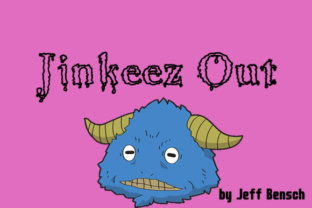
Jinkeez Out
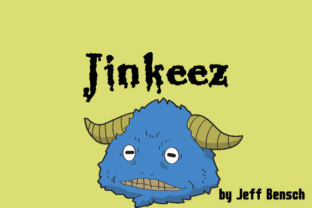
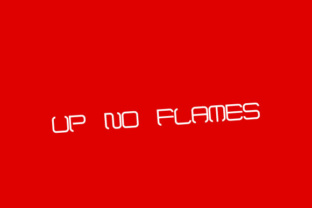
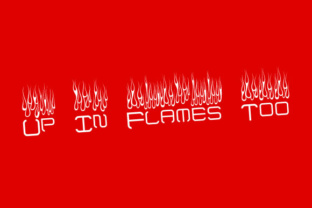
Jinkeez Out is a display typeface designed by Jeff Bensch that brings a distinctive blend of energy and legibility to headlines, logos, and short-form text. Unlike many display fonts that sacrifice readability for personality, Jinkeez Out maintains clear letterforms even at smaller sizes, making it a useful tool for designers, marketers, and content creators who need visual impact without confusion. The font sits at the intersection of playful and professional, which is why it has found a natural place in branding projects, event materials, social media graphics, and even editorial layouts.
Where Jinkeez Out Fits in a Design Workflow
Every design project requires a thoughtful selection of typefaces that support the intended message and audience. Jinkeez Out works best when you need to draw attention to a specific element—a title, a call-to-action, or a product name. Its character comes from slight irregularities in stroke weight and spacing, giving text a handcrafted feel that still reads cleanly.
In a typical workflow, Jinkeez Out is rarely the body copy font. Instead, it serves as the hero typeface that anchors the visual hierarchy. Designers often pair it with a neutral sans-serif or a simple serif for paragraphs, metadata, and navigation. This separation lets Jinkeez Out do its job without overwhelming the viewer. When building a brand toolkit, it can become part of the secondary type family—used for accent headlines, subheaders, or packaging details.
Before the Project: Planning and Asset Preparation
In the planning phase, identifying where Jinkeez Out will appear helps avoid last-minute substitutions. Download the font and test it in your design software—most modern tools support it without issues. Check its licensing terms: Jeff Bensch typically offers desktop and web licenses, so confirm you have the correct version for your deliverable. If you are collaborating with a team, agree on fallback fonts for environments where Jinkeez Out might not be installed, such as shared documents or client preview tools.
Prepare sample lockups or mood boards that show Jinkeez Out alongside your primary body font. This preview helps stakeholders approve the direction early. Also consider weight variations—if Jinkeez Out comes in light, bold, or condensed styles, explore them to see which best fits your tone of voice.
During the Project: Implementation and Iteration
When you start laying out pages, screens, or print materials, apply Jinkeez Out to key headings first. Adjust tracking (letter spacing) to reduce gaps in larger sizes—display fonts often look better with slightly tighter spacing. For logos or hero text, test both uppercase and title case. Jinkeez Out’s lowercase forms can introduce a more approachable feel, while uppercase may work better for authority.
Be mindful of color contrast. A thick display font like Jinkeez Out can hold its own on dark backgrounds, but thin versions may need a white or high-contrast backdrop. If you are using it on a website, add a font-display: swap CSS rule so fallback text appears quickly while the font loads. For print, request a proof at actual size—sometimes characters look different on screen than on paper.
After the Project: Evaluation and Reusability
Once a project ships, review how Jinkeez Out performed. Did it maintain readability in mobile banners? Did it distort when scaled down for social media avatars? Document these observations for future use. You can also repurpose the font for internal materials—presentations, training decks, or company newsletters—to reinforce brand consistency.
If you licensed the font for a specific campaign, note expiration dates or usage caps. Some font licenses limit the number of impressions or users. Keep a record of which files used Jinkeez Out so you can easily update them later if you switch typefaces.
Practical Implementation Tips
Integrating Jinkeez Out smoothly requires attention to a few technical and stylistic details.
- Pair wisely: Combine Jinkeez Out with a clean sans-serif like Open Sans, Roboto, or Inter for body text. Avoid pairing it with another busy display font unless you are creating a deliberately chaotic effect.
- Mind the size: Use Jinkeez Out at 18 points or larger for print, and 24 pixels or larger for web. Below these thresholds, the details may blur.
- Test legibility: Run a quick readability test: show the text to a colleague from a few feet away. If they can read the headline instantly, the size and spacing are appropriate.
- Optimize for retina vs. standard screens: Jinkeez Out’s subtle stroke variations look sharp on high-DPI displays, but on lower-resolution monitors consider enabling anti-aliasing or slightly increasing weight.
- Use character styles in design tools: Create a dedicated text style (paragraph or character style) for Jinkeez Out in Figma, InDesign, or Sketch. This ensures uniform kerning, leading, and color across all uses.
Pairing and Compatibility with Other Tools and Assets
Jinkeez Out works well with most vector and raster design applications. It installs like any other OpenType font on Windows and macOS. Web designers can host it via a self-hosted @font-face kit or use a service like FontSquirrel for conversion to WOFF2. Because it is not a system font, you will need to include it in your build pipeline—or embed it when exporting PDFs for print.
For motion designers, Jinkeez Out animates nicely in After Effects or Lottie, particularly for kinectic typography. Its irregular letterforms add personality when letters bounce, fade, or scale. In branding projects, pair the font with a mood board platform like Milanote or Miro to share early concepts with clients. Marketers using tools like Canva or Adobe Express can upload the font to maintain brand alignment even in non-standard templates.
One practical observation: Jinkeez Out tends to shine in spaces where you want to break away from corporate neutrals. It works well for startup brands, creative agencies, event posters, and personal projects. But it can feel out of place in highly conservative industries like legal or finance, unless used sparingly for a single accent word.
Maintaining Consistency and Quality Control
To keep Jinkeez Out looking professional across all touchpoints, establish guidelines for its usage. Define a palette of allowed sizes (headline, subhead, accent) and specify which version of the font (regular, bold, condensed) goes with each. For multi-page documents, ensure that all instances of Jinkeez Out use the same tracking and line-height to avoid a disjointed appearance.
Quality control should include a checklist: verify font embedding in PDFs, confirm web fonts load before content, and check that license credits are included if required. When collaborating with external vendors (printers, developers), send the font file or a clear fallback instruction to prevent substitution by a generic sans-serif.
Another consideration: if Jinkeez Out is used for a logo, protect the lockup by converting text to outlines in final files. This prevents accidental font loss or style mismatches when the logo appears on different systems.
Long-Term Use and Adaptation
Jinkeez Out is not a typeface that quickly dates because its design strikes a balance between whimsy and structure. If your brand identity evolves, the font can adapt to new contexts—think app icons, merchandise, or environmental signage—as long as you maintain the same visual hierarchy principles. Periodically revisit your usage guidelines as screen resolutions improve and new design trends emerge. The same font that worked for a 2019 website might require minor spacing adjustments for modern responsive layouts.
Designers who invest time in understanding Jinkeez Out’s personality often find it becomes a go-to for projects that need instant recognition without shouting. By treating it as a deliberate ingredient rather than an afterthought, you integrate it into your workflow as naturally as any other reliable asset.