Evaluating the Insomnia Script Font by Jokiranta
When selecting a script font for a design project, the sheer number of options can be overwhelming. Each typeface carries its own personality, technical specifications, and practical limitations. One option that has drawn attention in recent years is Insomnia, a clean monoline script font created by type designer Jokiranta. With roughly 140 glyphs, stylistic alternates, swashes, and ligatures, Insomnia presents a specific set of capabilities and constraints that merit a thorough evaluation. This article provides a balanced, objective look at what Insomnia offers, who it may serve well, and where alternatives might be a better fit, helping you decide whether it aligns with your design goals.
What Is the Insomnia Script Font?
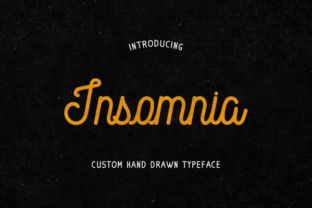
Insomnia is a monoline script typeface, meaning its strokes maintain a consistent thickness throughout each character. This gives the font a uniform, clean appearance that contrasts with more traditional calligraphic scripts that vary stroke width based on pen angle or pressure. Designed by Jokiranta, Insomnia includes approximately 140 glyphs, covering basic Latin characters, numerals, and common punctuation. The font distinguishes itself through its inclusion of stylistic alternates, swashes, and ligatures. These features allow designers to substitute default characters with more decorative or connected versions, adding a layer of customization and fluidity to the text.
The monoline nature of Insomnia places it within a category often used for contemporary branding, social media graphics, and editorial accents. It is not a revival of a historical script but rather a modern interpretation designed for digital and print use. Understanding these foundational characteristics is essential for evaluating whether it meets your specific project needs.
Reasons Designers Consider Insomnia
Several aspects of Insomnia make it an appealing candidate for certain types of projects. Its clean monoline structure offers readability at various sizes, which is not always the case with more ornate scripts. The presence of stylistic alternates and swashes provides flexibility to create unique typographic arrangements without needing multiple font weights or families. Ligatures help smooth out awkward letter combinations, making the script appear more natural and hand-drawn.
Additionally, the font's relatively small glyph set—around 140 characters—keeps the file size modest and the font easy to implement, particularly in web environments where loading speed matters. For designers working on projects that require a casual yet polished script, Insomnia can serve as a practical tool that balances aesthetics with performance.
Consistency and Readability
Because Insomnia is a monoline script, it avoids the dramatic thick-thin transitions common in brush or pointed pen scripts. This consistency helps maintain legibility at smaller sizes or on screens where contrast can be lost. For body text accents, pull quotes, or short passages, Insomnia holds up well compared to more delicate scripts that may become muddy or hard to read when reduced.
Customization Through OpenType Features
The stylistic alternates, swashes, and ligatures in Insomnia give you control over the character of the text. You can choose to use a more subdued set of default letters or activate swashes for a more expressive, decorative feel. This versatility means one font can serve multiple roles within a single project—for example, using a cleaner set for headings and a swash-heavy set for logos or initials. This reduces the need to purchase multiple fonts to achieve variety.
Modern and Minimal Aesthetic
Insomnia's clean lines align well with contemporary design trends that favor minimalism and clarity. It does not mimic handwriting with irregular baseline or letterform variation; instead, it offers a refined, deliberate script that feels curated. This makes it suitable for brands that want a human touch without appearing overly casual or messy.
Efficient File Size and Licensing
With only around 140 glyphs, Insomnia is efficient in terms of file size. This is a practical advantage for web use, where font loading can impact user experience. Additionally, if the licensing terms are straightforward, it can be a cost-effective choice for freelance designers or small businesses that do not want to invest in large font families.
Tradeoffs and Practical Considerations
No font is without tradeoffs, and Insomnia has several that may affect your decision. Understanding these limitations is crucial for avoiding surprises during the design process.
Limited Character Set
The most significant constraint of Insomnia is its glyph count. Approximately 140 glyphs means that the font may not support extended Latin characters, accented letters, or special punctuation used in languages beyond basic English. If your project requires multilingual support—for instance, French, German, Spanish, or Nordic languages—you may find that necessary characters are missing. This can force you to either supplement with another font or switch to a more comprehensive typeface altogether.
Lack of Weight Variations
Insomnia is a single-weight font. There are no thin, bold, or italic variants. This limits the typographic hierarchy you can build using just this typeface. For projects that require strong contrast between headings, subheadings, and body text, you would need to pair Insomnia with another font, adding complexity to your design system.
Monoline Uniformity May Feel Flat
While the consistent stroke width aids readability, it can also make the script feel less dynamic than scripts that incorporate variation. For some applications—especially those aiming for a handcrafted, organic, or luxurious look—the uniformity of a monoline script may come across as sterile or lacking in character. Designers seeking warmth or spontaneity might find Insomnia too controlled.
Dependence on Software Support for OpenType Features
To fully utilize the stylistic alternates, swashes, and ligatures, you need design software that supports OpenType features, such as Adobe Illustrator, InDesign, or Photoshop, as well as some modern web tools. If you are working with basic word processors or online tools that do not offer OpenType access, you may be limited to the default glyphs only, reducing the font's versatility.
Scenarios Where Insomnia Is a Strong Fit
Given its characteristics, Insomnia works well in several specific contexts:
- Branding and Logos for Minimalist Brands: If you are designing for a company that values clean, modern aesthetics—such as a tech startup, a lifestyle blog, or a boutique agency—Insomnia can provide a subtle script accent without overwhelming the brand identity.
- Social Media Graphics and Quotes: The font's readability at various sizes makes it practical for Instagram posts, Pinterest pins, or YouTube thumbnails where text needs to be quickly understood.
- Invitations and Stationery for Casual Events: For weddings, parties, or corporate events that aim for a polished but not overly formal tone, Insomnia offers a nice middle ground between casual handwriting and formal calligraphy.
- Web Headings and Accents: The small file size and clean rendering on screens make Insomnia a viable choice for web headings, especially when paired with a simple sans-serif body font.
- Single-Page Designs with Limited Text: If your project involves short bursts of text rather than long paragraphs, Insomnia's lack of weight variations is less of a limitation.
Scenarios Where Alternatives Are Worth Considering
There are also situations where Insomnia may not be the optimal choice, and exploring alternatives becomes worthwhile:
- Multilingual or International Projects: If your text includes accented characters or non-English languages, Insomnia's limited glyph set will likely be insufficient. Consider a more comprehensive script font like Pacifico or Great Vibes that includes broader language support.
- Projects Requiring Strong Typographic Hierarchy: When you need multiple weights or styles to differentiate content—such as a magazine layout, a book cover, or a complex website—a font family with at least two or three weights is more practical. Look for script families like Sweet Sans or Playlist Script that offer range.
- Designs Aiming for a Handcrafted or Organic Feel: If the brief calls for warmth, irregularity, or a hand-drawn aesthetic, a monoline script like Insomnia may appear too mechanical. A brush script or a more variable handwritten font would better capture that spirit.
- Large Amounts of Body Text: Script fonts, including Insomnia, are generally not designed for extended body copy. For paragraphs of text, a legible serif or sans-serif remains the standard. Using Insomnia for body text would likely tire the reader and reduce comprehension.
- Budget-Conscious Projects Seeking a Complete Family: While Insomnia may be affordable on its own, if you end up needing to purchase an additional font for weights or language support, the total cost may exceed that of a more complete script family.
Practical Decision-Making Insights
To determine whether Insomnia aligns with your goals, start by mapping your project requirements against the font's capabilities. Ask yourself the following questions:
- What languages do I need to support? If the answer includes languages beyond basic English, check the font's character map before committing.
- How much typographic variation do I need? If your design relies on multiple font sizes, weights, or styles for structure, plan to pair Insomnia with a complementary typeface rather than relying on it alone.
- Where will the text be displayed? For screen use, especially on mobile devices, Insomnia's monoline nature is an advantage. For large-format print, the clean lines also work well, but ensure the swashes and alternates do not become too fine at scale.
- How important is the handcrafted feel? If a natural, imperfect, or warm appearance is critical, test Insomnia against a brush script or variable handwriting font to see which better communicates your intended tone.
- Am I comfortable working with OpenType features? If your workflow does not support easy access to alternates and ligatures, you may not get the full value from Insomnia. Consider whether the default glyphs alone are sufficient for your design.
It can also be helpful to create a simple mockup using Insomnia before committing to the font. Place it in context—on a logo, a social media graphic, or a website header—and evaluate whether the clean monoline script achieves the visual tone you are aiming for. Compare it side by side with one or two alternative script fonts to see which feels more appropriate for the message and audience.
Final Considerations
Insomnia is a focused tool. It does not try to be everything to everyone, which is both its strength and its limitation. For designers who need a clean, modern script with some decorative flexibility and who work primarily in English, Insomnia can be a reliable and aesthetically pleasing choice. Its monoline consistency offers readability and a contemporary feel that many other scripts lack.
However, for projects requiring extensive language support, multiple weights, or a more organic handwriting aesthetic, Insomnia will likely fall short. In those cases, the practical choice is to look for a font that better matches the technical and tonal requirements of the project.
Ultimately, the decision comes down to alignment. By carefully evaluating your content, audience, and technical constraints, you can determine whether Insomnia is the right script for your work—or whether another typeface deserves the spotlight.