Brisk Wondering
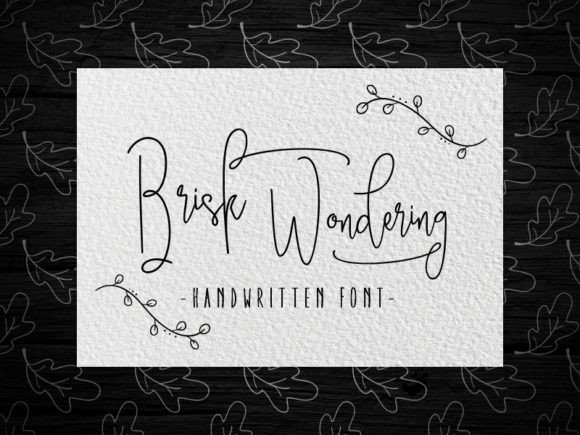
Brisk Wondering is an elegant handwritten font distinguished by its generous range of decorative swashes and flowing curly lines. Unlike many script typefaces that offer a single, fixed character set, this font includes multiple alternates for many letters, allowing you to create a unique look each time you use it. For anyone working on projects that call for a personal, handcrafted feel, understanding what Brisk Wondering offers, where it excels, and where it may fall short is essential for making an informed decision.
What Makes Brisk Wondering Stand Out?
At its core, Brisk Wondering is a script typeface that mimics the fluid strokes of handwriting. The inclusion of numerous ligatures and swash variants means the font can appear differently depending on which characters you choose. This variability is its primary strength — it gives designers the flexibility to avoid the mechanical repetition that often plagues digital scripts. Instead of seeing the same letterform over and over, readers encounter natural variation that feels more like genuine penmanship.
Typographers refer to this feature as "contextual alternates," and Brisk Wondering implements it extensively. Letters have multiple shapes: some with long looping tails, others with compact forms, and several with ornate flourishes. For someone evaluating fonts for a branding or invitation project, this variety is often the deciding factor. It allows you to adjust the tone from playful to formal simply by selecting different character variants within the same font file.
Reasons You Might Consider Brisk Wondering
Interest in Brisk Wondering typically arises from a need for elegance without sterility. Many sans-serif and serif fonts feel too structured for personal projects like wedding stationery, heartfelt correspondence, or boutique branding. Brisk Wondering fills that gap: it is readable enough for short blocks of text yet decorative enough to serve as a display face.
- Unique visual identity: Because of the broad selection of alternates, two designers using the exact same font can produce totally different results. This makes it suitable for brand identities where a handwritten touch is desired, but the brand still wants to stand apart from others using similar scripts.
- Versatile mood control: The curly lines and swashes can convey warmth, nostalgia, or sophistication depending on how they are applied. Pairing the font with clean layout elements can modernize it; pairing it with vintage textures emphasizes its romantic side.
- Personalization for recurring use: If you plan to use the font repeatedly (e.g., for a blog, product packaging, or event series), the variability prevents the design from becoming stale. You can subtly change the look each time while maintaining a consistent overall style.
Practical Benefits and Advantages
From a practical standpoint, Brisk Wondering offers several concrete advantages that simplify the design process. First, the font is typically delivered with both uppercase and lowercase options, numerals, punctuation, and a rich set of ligatures. This means you do not need to purchase additional swash or ornament fonts to achieve a decorated look — everything is self-contained. For someone comparing font families, this can represent better value than buying a basic script plus separate decorative elements.
Second, the font works well at moderate to large sizes. While many scripts become unreadable below 14 points, Brisk Wondering retains legibility down to around 12 points when set with generous letter spacing. This makes it feasible for use in body copy in short form, such as a single paragraph in a greeting card or a tagline on a website. It is not intended for lengthy articles, but for short, impactful messages it performs capably.
Third, the careful design of the swashes means they rarely collide with other letters. The font includes kerning pairs that adjust spacing around ornate characters, so you get a balanced line without manual tweaking. This is a significant time-saver for anyone who has struggled with decorative fonts that require extensive manual spacing adjustments.
Tradeoffs and Considerations
No font is universally perfect, and Brisk Wondering has its limitations. When evaluating whether it aligns with your project, consider the following tradeoffs:
- Legibility at small sizes: While it performs better than many scripts at 12 points, it is not suitable for small body text in web or print. If your project requires extensive text at sizes below 11 points, a simpler sans-serif or serif font will be more reader-friendly. Brisk Wondering is best reserved for headings, logos, and short statements.
- Formal settings: The handwritten, curly nature of the font may feel too informal for corporate reports, legal documents, or academic papers. In professional contexts where tradition and clarity are paramount, a more conventional typeface would be a better choice. However, for creative industries such as wedding planning, lifestyle blogs, or artisan product branding, the informality is an asset.
- Digital reproduction challenges: Depending on the rendering engine, some swashes may appear cut off or misaligned in older web browsers or low-resolution screens. Testing the font in your target environment is advisable. For print, this is rarely an issue, but for digital use, ensure you preview the font in all major browsers.
- Learning curve: To fully leverage the alternate characters and ligatures, you need to use software that supports OpenType features (such as Adobe InDesign, Illustrator, or Affinity Publisher). Basic word processors and some online design tools may not give you access to the full character set, limiting the font’s variability. If you rely on simpler software, Brisk Wondering may still work, but you will not benefit from its main advantage.
When Brisk Wondering Is a Strong Fit
Based on its characteristics, Brisk Wondering excels in specific scenarios. If you are designing anything that aims to feel handcrafted and personal, this font is a compelling option. Concrete examples include:
- Wedding and event invitations: The swashes mimic the elegance of calligraphy without the cost of a hand-lettering artist. You can create multiple invitation versions by swapping character alternates, making each invitation feel slightly unique.
- Logo design for artisanal brands: Bakeries, florists, small clothing ateliers, and craft shops often benefit from a handwritten logo. Brisk Wondering can give them a warm, approachable identity that stands out from corporate competitors.
- Social media graphics and quotes: For platforms like Instagram or Pinterest, short, punchy text set in a decorative script performs well. The curly lines add visual interest to an otherwise simple image.
- Product packaging: Limited-run or seasonal items can use the font to convey a handcrafted feel. The variability allows you to adjust the style between product lines while keeping the brand font consistent.
- Personal correspondence and journals: If you run a stationery shop or create custom journals, this font can add value by making printable templates look hand-lettered.
When Alternatives May Be Worth Considering
Despite its strengths, Brisk Wondering is not the best choice for every project. If any of the following conditions apply to your needs, exploring other fonts may be more practical:
- You need extreme legibility above all else: Projects like children’s books, instructional materials, or government forms require maximum clarity. A clean humanist sans-serif (e.g., Source Sans, Noto Sans) or a classic serif (e.g., Georgia, Garamond) will serve better. The curly lines of Brisk Wondering, while beautiful, add visual noise that can hinder fast reading.
- You work with long-form text: For anything beyond a few sentences, a script font fatigues the eye. Brisk Wondering is not designed for paragraphs. If your project involves articles, reports, or books, use it only for headings and pair it with a simple body font.
- Your project requires a multilingual character set: Many decorative scripts have limited support for accented characters, Cyrillic, or non-Latin scripts. If your audience uses languages beyond basic Western European, verify whether Brisk Wondering covers those glyphs. If not, a more comprehensive typeface like Alex Brush or Great Vibes may be better alternatives.
- You need a modern, minimalist aesthetic: Brands that emphasize clean lines and sans-serif minimalism may find the swashes too ornate. In such cases, a simple handwritten font with fewer flourishes (e.g., Caveat or Pacifico) can provide a handcrafted look without the extra decoration.
Practical Decision-Making Insights
To decide whether Brisk Wondering aligns with your goals, start by clarifying the project’s primary purpose. Ask yourself: Will the text be read as part of a larger design, or is it the main focal point? If it is a focal point (like a logo or a title), the decorative nature is a strength. If it is supporting text that must be scanned quickly, the font may distract.
Next, consider the medium. For print applications such as cards, brochures, or signage, Brisk Wondering performs reliably. For digital use, plan to embed the font via @font-face and test it on mobile devices. Some fine hairline swashes may appear faint on low-resolution screens; choosing a heavier weight (if available) or increasing the font size can mitigate this.
Also evaluate your software capabilities. If you use design software like Adobe Creative Cloud, you will be able to access the OpenType features that unlock the alternates. If you work primarily with Google Docs, Canva (free tier), or similar tools, you may only get the base characters. In that case, the font still looks good, but you lose the variability that makes it unique. For maximum value, ensure your workflow supports advanced typography.
Finally, consider the longevity of your project. For one-time items like party invitations, the investment in a premium decorative font is often worthwhile. For a long-term brand identity, test the font in multiple contexts to ensure it does not become visually tiring. Since Brisk Wondering offers built-in variety, it can actually help a brand evolve over time without a complete redesign.
If you are comparing Brisk Wondering to other script fonts, focus on the specific alternatives that also offer extensive alternates. Fonts like Citrus Swirl or Saturday Script have similar variability but different aesthetic tones. View sample text set in each font at the sizes you plan to use. Pay attention to how the swashes interact with adjacent letters, and whether the overall rhythm matches your project’s personality.
In summary, Brisk Wondering is a well-crafted handwritten font that prioritizes elegance and variety. It works best for short, expressive text in both print and digital media, especially when you have control over the design software. Its tradeoffs are mainly around legibility at small sizes and its formal suitability. By evaluating your project’s reading length, intended audience, and technical environment, you can confidently determine whether this font meets your needs or whether an alternative script or non-script typeface would serve you better.