Posteratus Rex
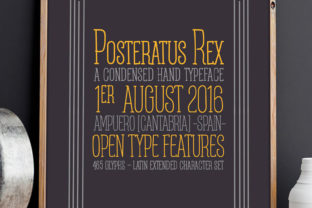
Some fonts grab your attention quietly. Posteratus Rex is one of those. It is a condensed typeface built for posters, but its reach goes far beyond that. The design sits on a narrow line between clarity and sophistication. The letters are thin, vertical, and well-spaced, which gives them a clean presence without shouting. This balance makes Posteratus Rex a practical choice for anyone working with limited space who still wants text to feel intentional. Whether you are designing a movie poster, a product label, or a digital banner, this font helps you say more with less visual clutter.
What makes Posteratus Rex different from other condensed fonts
Condensed fonts are common. You see them in newspaper headlines, packaging, and signage. But many condensed typefaces sacrifice readability for tight spacing. Posteratus Rex avoids that trap. Its thin strokes are clear enough to read from a distance, yet refined enough to hold up in close-up print or screen. The letterforms are not squashed. They are elongated, which creates a vertical rhythm that guides the eye naturally down the page. That is a subtle but important detail when you are trying to hold someone's attention in a crowded visual environment.
Where Posteratus Rex fits into real projects
The name suggests posters, and that is a natural home for this font. But the real strength of Posteratus Rex shows up in situations where space is tight and tone matters. Think about a film festival program where you need to list dozens of titles, times, and venues on a single large sheet. A wider font would force you to reduce the point size or split content across multiple lines. Posteratus Rex keeps everything on one line, and the readability holds even at smaller sizes. That is a practical win.
Another example is retail signage. A store window often has just a few seconds to communicate a message. Condensed fonts like Posteratus Rex let you fit a longer product name or tagline into a narrow sign without shrinking the text to nothing. The thin lines also pair well with bold background colors or photography because they do not compete for attention. Instead, they sit on top of the visual content and let the message come through cleanly.
Event posters and announcements
Concerts, conferences, gallery openings, and community events all rely on posters to draw people in. The challenge is balancing information density with visual appeal. Posteratus Rex works well here because you can stack multiple lines of text in a narrow column and still keep everything legible. A typical concert poster might need to show the band name, venue, date, time, ticket link, and supporting acts. With Posteratus Rex, you can arrange that information in a single column without it looking cramped. The thin strokes also reproduce well on lower-quality paper, which is common in large-format print runs.
Product packaging and labels
Packaging designers often struggle with ingredient lists, legal text, or multilingual descriptions that have to fit into a small area on a bottle, box, or tube. Posteratus Rex gives you more characters per inch without making the text look crowded. That is especially useful for beauty products, supplements, and food items where the label space is limited by the container shape. The elegant thin lines also add a premium feel, so the packaging looks more deliberate and less utilitarian.
Digital banners and social media graphics
Condensed type is not just for print. In digital environments, screen real estate is even more limited. A banner ad or social media graphic often has to convey a message in a fraction of a second. Posteratus Rex allows you to pack more words into a headline without reducing the font size to the point of illegibility. That is helpful for call-to-action buttons, promotional overlays, or thumbnail titles. The font also renders smoothly on screens because the stroke weight is consistent, so you do not get jagged edges at smaller sizes.
Different users, different benefits
Posteratus Rex is not a one-size-fits-all tool, but it serves a wide range of people well. Here is how different users might get value from it in their own workflows.
Graphic designers and art directors
For professionals working on branding or campaign materials, Posteratus Rex offers a way to introduce variety into a type palette without switching to a completely different style. It pairs well with sans-serif body fonts like Helvetica or Inter because of its narrow, airy structure. Designers can use it for subheadings, pull quotes, or accent text to create visual contrast. The font also works in both uppercase and lowercase, which gives more flexibility when laying out mixed-case headlines.
Small business owners and entrepreneurs
If you run a small business and create your own marketing materials, you need type that looks professional without requiring deep design skills. Posteratus Rex is easy to use because it does not need complex kerning adjustments or special spacing tricks. Drop it into a poster template, and it will look good. That saves time and reduces the risk of amateur-looking results. It works well for menu boards, flyers, and social media posts where you want to project a polished image on a tight budget.
Event organizers and non-profits
Organizations that produce a lot of printed materials on a tight schedule benefit from fonts that handle dense information gracefully. Posteratus Rex helps you fit schedules, speaker lists, and logistics into a single program sheet without needing a second page. That cuts printing costs and makes the content easier to scan. The readability also helps older audiences who may struggle with very small text, because the vertical orientation and clear counters keep letters distinct even at smaller sizes.
Content creators and influencers
For YouTube thumbnails, Instagram carousels, or blog headers, Posteratus Rex adds a touch of editorial style. The condensed look signals that the content is curated and intentional. It works especially well for quote graphics, list posts, or minimalist designs where the text is the main visual element. The font's thin lines also leave room for icons, borders, or background textures without overwhelming the composition.
Common considerations before using Posteratus Rex
No font is perfect for everything, and Posteratus Rex has some characteristics worth keeping in mind. The thin strokes mean it is not ideal for body text at very small sizes, especially in low-resolution print or on screens with poor pixel density. If you need to set long paragraphs at 10 points, a regular weight serif or sans-serif will serve better. Posteratus Rex shines in display roles where the text is meant to be seen, not read in bulk.
Another consideration is legibility under extreme lighting. In outdoor signage with direct sunlight or glare, thin letters can wash out if the contrast is not high enough. Using a dark color on a light background, or white on a very dark background, helps. Avoid placing the font over complicated photographic backgrounds without a solid color block or gradient behind the text.
Finally, consider the overall tone of your project. Posteratus Rex carries a modern, slightly editorial feel. It may not suit vintage, rustic, or playful designs where a rounder or more irregular font would feel more appropriate. Matching the font's personality to the message is always worth the extra thought.
Practical examples of Posteratus Rex in action
A music festival poster that lists 20 acts across two days. With Posteratus Rex, each band name sits in a single line, and the thin strokes let the names breathe without overlapping the stage times. The result is a poster that looks organized without feeling dense.
A skincare product label that has to include ingredients in four languages. Posteratus Rex condenses the text so it fits comfortably on the side panel of a 50 ml tube. The elegant letterforms also reinforce the brand's clean, minimalist aesthetic.
A conference schedule printed on a single A1 sheet. The font allows the organizer to list session titles, speakers, and room numbers in a tight grid that is easy to scan from a distance. Attendees do not have to squint or walk up to the board to read the details.
Strengths worth noting
- Space efficiency without sacrificing readability. You get more words per line, which is a direct practical advantage.
- Clean vertical rhythm that guides the eye naturally. This is especially useful for stacked headlines or multi-line lists.
- Good print reproduction at medium to large sizes. The thin strokes hold up well on uncoated paper and offset processes.
- Versatile pairing with many common body fonts. It does not demand a specific companion, which gives designers flexibility.
- Modern, editorial feel that works across industries from fashion to technology to events.
Limitations to be aware of
- Not suitable for small body text below 12 points in print or 16 pixels on screen, especially in low-resolution contexts.
- Requires good contrast to remain legible. Thin lines can disappear against busy or low-contrast backgrounds.
- Limited stylistic range compared to larger font families. Posteratus Rex offers a focused look, not a broad set of weights and styles.
- May feel too narrow for projects that need a more open, airy, or playful typeface. Matching the font to the tone is key.
Posteratus Rex is a tool with a specific strength. When you need condensed type that still reads well and looks refined, it delivers. The practical value shows up most in projects where space is limited, information is dense, and the visual tone matters. From concert posters to product labels to digital banners, it helps you present text in a way that is both efficient and elegant. That balance is what makes it worth reaching for when the layout demands more from your typeface.