Absinth: A Hand-Painted Handwritten Font Inspired by Van Gogh
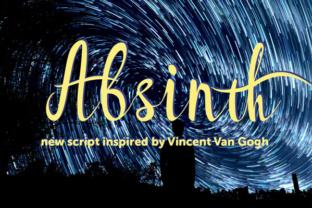
Typography has a quiet power. It shapes how we read, how we feel, and how we remember. Among the vast sea of digital fonts, a rare few carry not just style but a story. Absinth is one of those. This hand-painted handwritten font draws its soul directly from the brushstrokes and ink of Vincent van Gogh, pulling inspiration from both his iconic paintings and the deeply personal letters he wrote to his brother, Theo. It does not merely imitate handwriting — it channels the emotion, texture, and imperfect beauty of one of history's most expressive artists. Whether you are a designer hunting for authentic character or a business owner wanting your brand to feel human, Absinth offers something rare: a typeface that feels less like a tool and more like a voice.
The Story Behind Absinth: From Canvas to Character
Van Gogh's letters to Theo are among the most intimate documents in art history. They reveal his struggles, his obsessions, and his unrelenting pursuit of beauty. Absinth takes those raw, hand-written lines and transforms them into a usable typeface. Every glyph in Absinth is hand-painted, meaning no two strokes are perfectly identical. The font carries the slight tremors, the pressure shifts, and the organic flow of a real brush moving across paper.
What makes Absinth stand out is not just its origin story but its visual texture. The letters have a slightly weathered, ink-bleed quality — as if they were written with a fountain pen on rough cotton paper. The uppercase characters lean and sway with an almost painterly rhythm, while lowercase letters feel quick and intimate, like a note dashed off in a moment of inspiration. Using Absinth in a project immediately adds a layer of authenticity that sterile, vector-perfect fonts simply cannot match.
This is not a font you use to blend in. It is a font you use to communicate feeling. Whether you are referencing Van Gogh's sunflower golds or the swirling blues of Starry Night, Absinth carries that same emotional weight — but in the form of letters.
Who Is Absinth For? Practical Audience Insights
Absinth is not a one-size-fits-all typeface. It has a distinct personality, and that personality serves specific needs remarkably well. Here is a breakdown of who will benefit most from using it:
- Graphic designers and illustrators seeking a handwritten font that does not look generic or mass-produced.
- Small business owners building a brand identity around authenticity, artistry, or handcrafted goods.
- Content creators and social media managers who want captions, titles, or quotes to feel personal and expressive.
- Publishers and authors working on poetry, memoirs, or creative nonfiction where tone matters as much as text.
- Art and culture bloggers creating content about Van Gogh, impressionism, or art history who want the font to echo the subject matter.
- Packaging and product designers for boutique items such as artisan coffee, handmade soap, craft chocolate, or stationery.
If your audience values human touch, individuality, and emotional resonance, Absinth speaks their language. If you need cold, corporate readability — this is not the font for you. But for projects where warmth and character matter, Absinth is a powerful choice.
Features and Characteristics of Absinth
Understanding a font's features helps you decide where it fits best. Absinth is not a neutral tool; it is an expressive instrument. Here are its defining characteristics:
- Hand-painted authenticity: Every character was physically painted, then digitized. This gives the font genuine irregularity — no two letters are mathematically identical.
- Ink-bleed texture: The edges of each glyph carry a slight roughness, mimicking the way ink spreads on uncoated paper.
- Expressive baseline: Letters do not sit on a rigid line. They rise and fall slightly, replicating natural handwriting rhythm.
- Variable stroke weight: The brush pressure changes across strokes, creating thick and thin transitions that feel organic.
- Van Gogh-inspired aesthetic: The overall mood mirrors the emotional intensity found in Van Gogh's letters and paintings.
- Comprehensive character set: Includes uppercase, lowercase, numerals, punctuation, and basic multilingual support.
- OpenType features: Contextual alternates and ligatures that add further variation, so repeated characters do not look identical.
These features make Absinth especially effective for short to medium-length text. Headlines, pull quotes, titles, and packaging copy are where it shines brightest. For long body copy, its expressive nature may become distracting, but used sparingly it adds enormous visual interest.
Real-World Applications and Scenarios
Let us move beyond theory and into practice. Here are specific real-world examples of how Absinth can be used effectively across different industries:
Scenario one — Artisanal brand identity: Imagine a small-batch gin distillery. Their label uses clean, modern fonts — but it feels like every other premium spirit. Switching the brand name to Absinth (the irony of the name not lost on gin makers) immediately transforms the label. The hand-painted letters evoke craftsmanship, tradition, and a personal story. Paired with a muted serif for the ingredients list, the label becomes memorable. Customers feel they are buying something made by hands, not machines.
Scenario two — Social media storytelling: A travel content creator shares words of Van Gogh alongside photos of Provence. Using Absinth for quote graphics creates a visual bridge between the artist's words and the modern landscape. The font's emotional texture makes followers pause longer, engaging more deeply with the post. The font becomes part of the narrative, not just a delivery system for text.
Scenario three — Poetry chapbook cover: A poet self-publishes a collection titled Letters I Never Sent. The cover uses Absinth for the title, printed in a warm cream against a deep blue background. The irregular, hand-painted letters echo the content — personal, imperfect, and raw. Readers feel the connection before they read a single verse.
Scenario four — Art exhibition signage: A gallery hosting a Van Gogh retrospective uses Absinth for wall labels and introductory panels. The font's visual link to the artist's handwriting reinforces the exhibition theme. Visitors experience a cohesive visual environment where typography and artwork speak the same language.
These scenarios illustrate that Absinth is not just a font — it is a storytelling device. When the medium matches the message, communication becomes more powerful.
Strengths, Considerations, and Limitations
No typeface is perfect for every context. Being honest about a font's strengths and limitations helps you use it wisely.
Strengths: Absinth excels at creating emotional impact. Its hand-painted quality builds trust and authenticity. It stands out in a world saturated with generic sans-serifs. It connects immediately with audiences who value artistry and human expression. The font also works beautifully at larger sizes where its texture and irregularities become assets rather than distractions.
Considerations: Because Absinth is highly expressive, it demands careful pairing. Use it with neutral, quiet fonts for body text — a clean serif or a minimal sans-serif works well. Avoid pairing it with other decorative fonts, as the result can feel chaotic. The font also has a distinct emotional tone — thoughtful, melancholic, passionate — which may not suit lighthearted or corporate projects.
Limitations: Absinth is not ideal for long blocks of text. Its irregular baseline and variable stroke weight can cause reader fatigue in extended reading. It is also not suitable for very small sizes, where its subtle ink-bleed texture may blur or become illegible. Additionally, the font's Van Gogh inspiration means it carries a specific cultural and historical connotation — using it in contexts completely unrelated to that aesthetic may feel mismatched.
Understanding these boundaries helps you deploy Absinth where it will be most effective — as a focal point, not a workhorse.
How to Evaluate If Absinth Fits Your Project
Before committing to a font, it helps to ask a few direct questions. Here is a practical checklist to guide your decision:
- What tone am I trying to convey? If warmth, vulnerability, passion, or craftsmanship — Absinth is a good match. If efficiency, formality, or minimalism — look elsewhere.
- What size will the text appear? For headlines, titles, logos, quotes, or packaging above 24pt — Absinth works beautifully. For body text below 14pt — proceed with caution.
- Who is my audience? Will they appreciate a hand-painted, artistic font? If your audience values authenticity and human touch, Absinth will resonate. If they expect clean, corporate readability — choose a neutral font instead.
- What is the medium? Digital screens preserve the font's texture well, especially retina displays. Print on textured paper enhances the ink-bleed effect. For very small digital applications like mobile UI, Absinth may lose clarity.
- Does the content match the font's origin? While not strictly necessary, using Absinth for content that relates to art, creativity, letters, or personal expression creates a powerful synergy.
By running your project through this checklist, you will know quickly whether Absinth is a strategic choice or a beautiful mismatch.
Final Thoughts on Absinth
Absinth is more than a typeface — it is a tribute. It carries the spirit of Vincent van Gogh's relentless pursuit of beauty, his vulnerability, and his unpolished genius. In a digital landscape where so much feels cold and automated, Absinth brings warmth, texture, and a genuine human voice.
For designers, creators, business owners, and storytellers who want their words to feel alive, Absinth offers a rare connection between visual art and written language. Use it intentionally. Pair it carefully. And let it give your projects the kind of authenticity that cannot be faked — only painted.
Discover whether Absinth belongs in your next project. Let its hand-painted strokes carry your message the way Van Gogh's letters once carried his — with honesty, passion, and an unmistakable human touch.